
LED bulbs
Which LED bulb goes where
Read the old bulb before you buy the new one. The base, the shape and the switch decide most of it, and the light color does the rest.
Contents
- Start with the base: E26 and the smaller ones
- Shape: A15 and A19
- Brightness: read lumens, not watts
- Light color: what the K number means
- The fridge bulb
- Low-watt A15 and night bulbs
- Amber and red bulbs
- Dusk-to-dawn: the porch light that minds itself
- The 3-way bulb
- A grow bulb for a houseplant corner
- Which bulb for which spot
- Changing a bulb safely
- Where to go next
Most bulb shopping starts the same way. A bulb goes out, you unscrew it, and you stand in front of a shelf holding a small glass thing with faded print on it. Which base is it? How bright was it? Why does the new one look blue? This guide walks through the questions in the order you meet them: the base, the shape, the brightness, the color of the light, and then the special jobs, from the fridge to the porch.
We make 8 kinds of LED bulbs, and every one of them screws into the same standard household socket. That makes them easy to swap in. The hard part is choosing the right one for each spot, and each one has places where another bulb serves you better.
Start with the base: E26 and the smaller ones
The metal screw at the bottom of a bulb is the base. In the United States, the ordinary lamp and ceiling socket takes a medium screw base. Federal rules for lamps define it plainly:
Medium screw base means an Edison screw base identified with the prefix E-26
The number is the width of the screw in millimeters, so E26 is about an inch across. All of our bulbs use it. If the bulb you are replacing has a base the size of your thumb tip, it is not an E26. The same federal definitions list the smaller candelabra bases by their own names:
common designations E11 and E12
Candelabra bases show up in chandeliers, some ceiling fans and some appliances. Our bulbs will not fit them. So before you buy, take the old bulb with you, or compare its base with a known E26 bulb from a table lamp.
Three-way is a different socket
A 3-way lamp has a socket with an extra contact. It looks like an ordinary E26 socket from above, but the lamp switch clicks through four positions: low, medium, high and off. Our 3-way bulb uses that extra contact. In an ordinary socket it lights at one level only. More on that below.
Shape: A15 and A19
The letter and number on a bulb's shape tell you its profile and width. "A" is the classic pear shape. The number is the widest point in eighths of an inch, so an A19 is 19/8, a little under two and a half inches across, and an A15 is a bit under two inches.
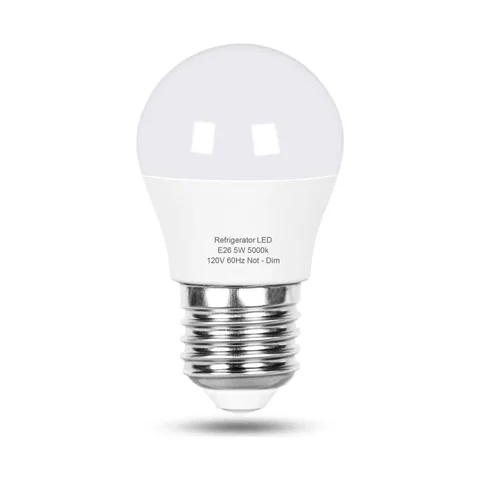
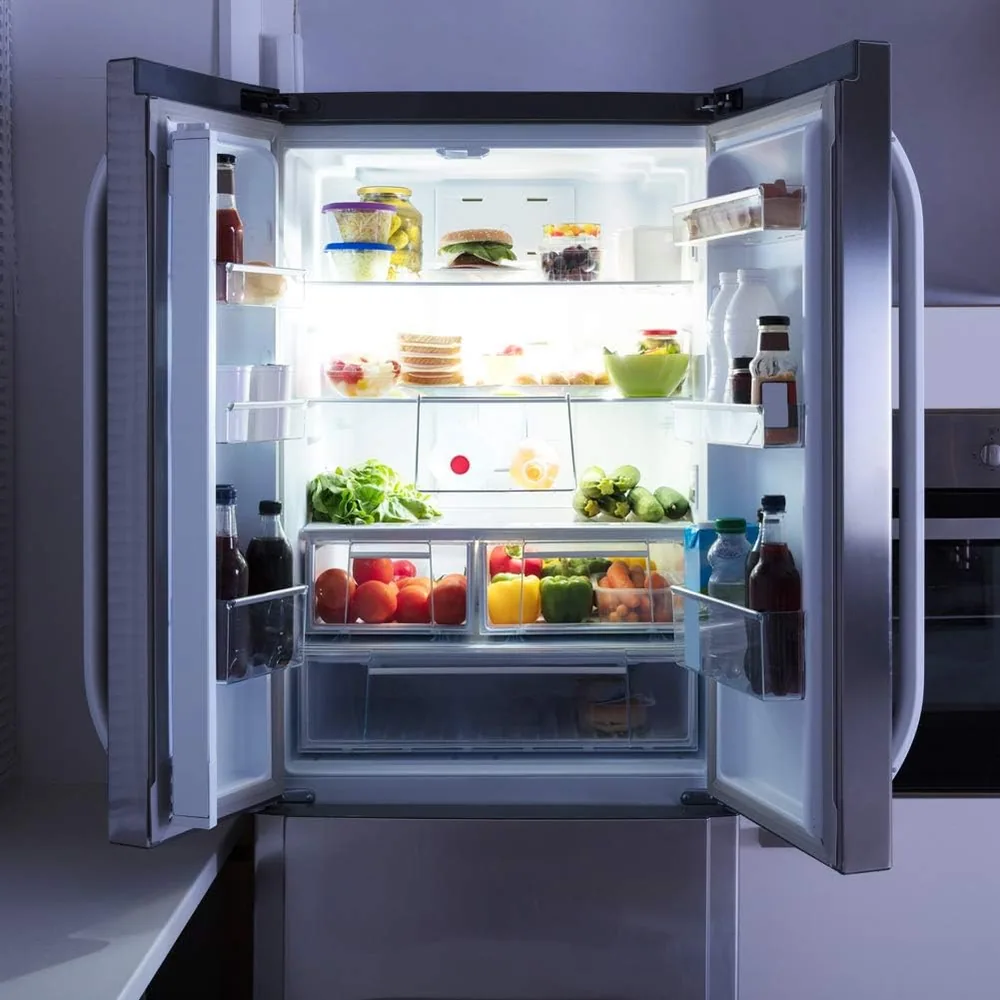
A19 is the everyday bulb in table lamps and ceiling fixtures. A15 is the smaller one you find in fridges, range hoods, ceiling fans and small lamps where a full-size bulb would touch the shade or the glass. Our fridge bulb measures 1.76 in wide, 3.46 in tall, small enough for most fridge and freezer housings.
| Bulb | Shape | Base | Power | Looks like |
|---|---|---|---|---|
| A15 LED Refrigerator Bulb, 40W Equivalent | A15 | E26 | 5 W | 40 W incandescent |
| 3W A15 LED Bulb, 25W Equivalent | A15 | E26 | 3 W | 25 W incandescent |
| 1.5W A15 Night Bulb, 15W Equivalent | A15 | E26 | 1.5 W | 15 W incandescent |
| Amber A15 LED Bulb, Dimmable | A15 | E26 | 3 W | 25 W incandescent |
| Red A15 LED Bulb, Dimmable | A15 | E26 | 3 W | 25 W incandescent |
| Dusk-to-Dawn LED Bulb with Light Sensor | A19 | E26 | 7 W | No incandescent rating |
| 3-Way A19 LED Bulb, 30/70/100W Equivalent | A19 | E26 3-way | Three steps | 30, 70 and 100 W |
| Full-Spectrum LED Grow Light Bulb | Bulb with a white cover | E26 | 11 W | No incandescent rating |
If the old bulb sat inside a tight glass cover, measure the space before you choose: a bulb that is too tall can stop the cover from closing.
Brightness: read lumens, not watts
For a century, people chose bulbs by watts: 40 for a small lamp, 60 for a reading lamp, 100 for a big room. Watts measure power used, not light given. An LED gives the same light with far fewer watts, so the number on the box now has to say something else. The federal lighting label does that. The FTC rule says the front of the box has to show brightness as lumens:
The light output of each lamp included in the package, expressed as “Brightness” in average initial lumens rounded to the nearest five
That is why LED boxes carry a second number, the "equivalent." Our fridge bulb uses 5 W and is sold as a 40 W incandescent equivalent. The Cool White version uses 4 W and gives 410 lumens. Our A15 3W bulb uses 3 W in place of a 25 W bulb, and our night bulb uses 1.5 W in place of a 15 W bulb.
Equivalents are a starting point, not a promise. Two bulbs with the same equivalent can look different in the same lamp, because shades, walls and the color of the light all change how bright a room feels. Buyers of our low-watt A15 say so in both directions. One found it brighter than expected:
Very nice, but much brighter than a 25 watt candescent light bulb.
Another wanted a softer light from the same bulb:
would like them to be a little softer in lighting.
The yearly cost line
The same FTC label shows a yearly energy cost, and it uses a fixed set of assumptions so that boxes can be compared:
The estimated annual energy cost of each lamp included in the package, expressed as “Estimated Energy Cost” in dollars and based on usage of 3 hours per day and 11 cents ($0.11) per kWh.
Your bill will differ, because few lamps run exactly three hours a day and few homes pay exactly 11 cents. But the line is useful for comparing two boxes side by side. A porch bulb that runs all night will cost more per year than its label says, and a closet bulb will cost less.
Light color: what the K number means
The second number on a bulb box is the color of the light, given in kelvins. The federal definition is technical:
Correlated color temperature (CCT) means the absolute temperature of a blackbody whose chromaticity most nearly resembles that of the light source.
In plain words, a low number is warm and yellow, like an old incandescent or a candle. A high number is cool and white, closer to daylight. The FTC label shows it as a scale from warm to cool, and it pins the ends of that scale:
placed proportionately on the scale where the left end equals 2,600 K and the right end equals 6,600 K
Our bulbs cover more than that range, because two of them are colored lights rather than white light. On one scale, they run from the deep amber of our evening bulb to the daylight white of the fridge bulb:
- 1800KAmber
- 2700KWarm White
- 5000KDaylight
| Light color | Kelvins | Feels like | Good for |
|---|---|---|---|
| Amber | 1800K | Candle or sunset | Evening lamps by the bed or the sofa |
| Warm or soft white | 2700K | A classic incandescent | Living rooms, bedrooms, hallways |
| Daylight or cool white | 5000K | Bright midday light | Fridges, garages, desks, closets |
A quick rule from experience: inside a fridge, a closet or a garage, you want to see true colors, so choose daylight. In the rooms you relax in, warm white looks like home. Mixing a 2700K lamp and a 5000K lamp in one room makes both look wrong, so try to keep one light color per room.

The fridge bulb
Fridge bulbs used to be a special kind of incandescent. Federal rules call them appliance lamps, and they have their own limit:
Is specifically designed to operate in a household appliance and has a maximum wattage of 40 watts (including an oven lamp, refrigerator lamp, and vacuum cleaner lamp)
The cap is 40 W, and 40 W is the brightness our refrigerator bulb replaces. It uses 5 W, has an E26 base and an A15 shape, and its cover is plastic rather than glass. It comes in Daylight 5000K, Soft White 2700K and Cool White 5000K. It is not dimmable.
The most common install problem is easy to fix. The LED housing is slightly wider at the neck than an old bulb, so the first turns can feel finished before the bulb has made contact. One buyer described it well:
You have to keep turning a little bit more to pull it closer to the base of the socket and then it works just great.
Another noticed the difference in light color right away:
The 5000K daylight color is excellent and much better than my old yellow bulb.
Check your fridge first
It is not dimmable and not a smart bulb. Check your appliance manual before buying: some fridges take a smaller E12 or E17 base or an LED panel that is not a bulb at all.
The same small bulb has a second life outside the kitchen. Buyers put it in bedside lamps, vanity lights and range hoods, anywhere a short E26 bulb is needed. One used it in a fussy bedside lamp:
I was looking for a replacement bulb for a bedside lamp that has a standard threaded base but is small, and this did the trick in a finicky fixture.
Low-watt A15 and night bulbs
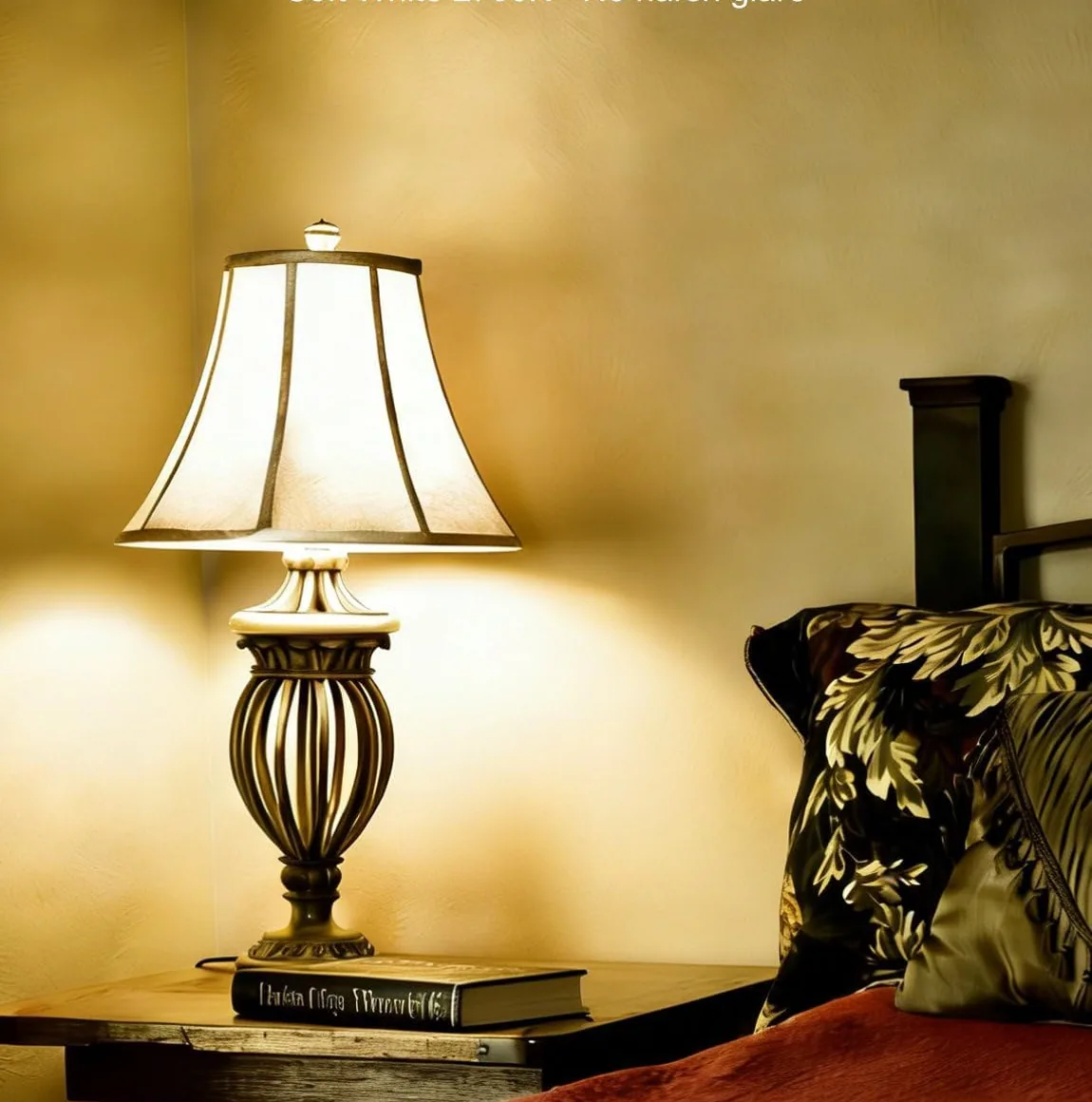
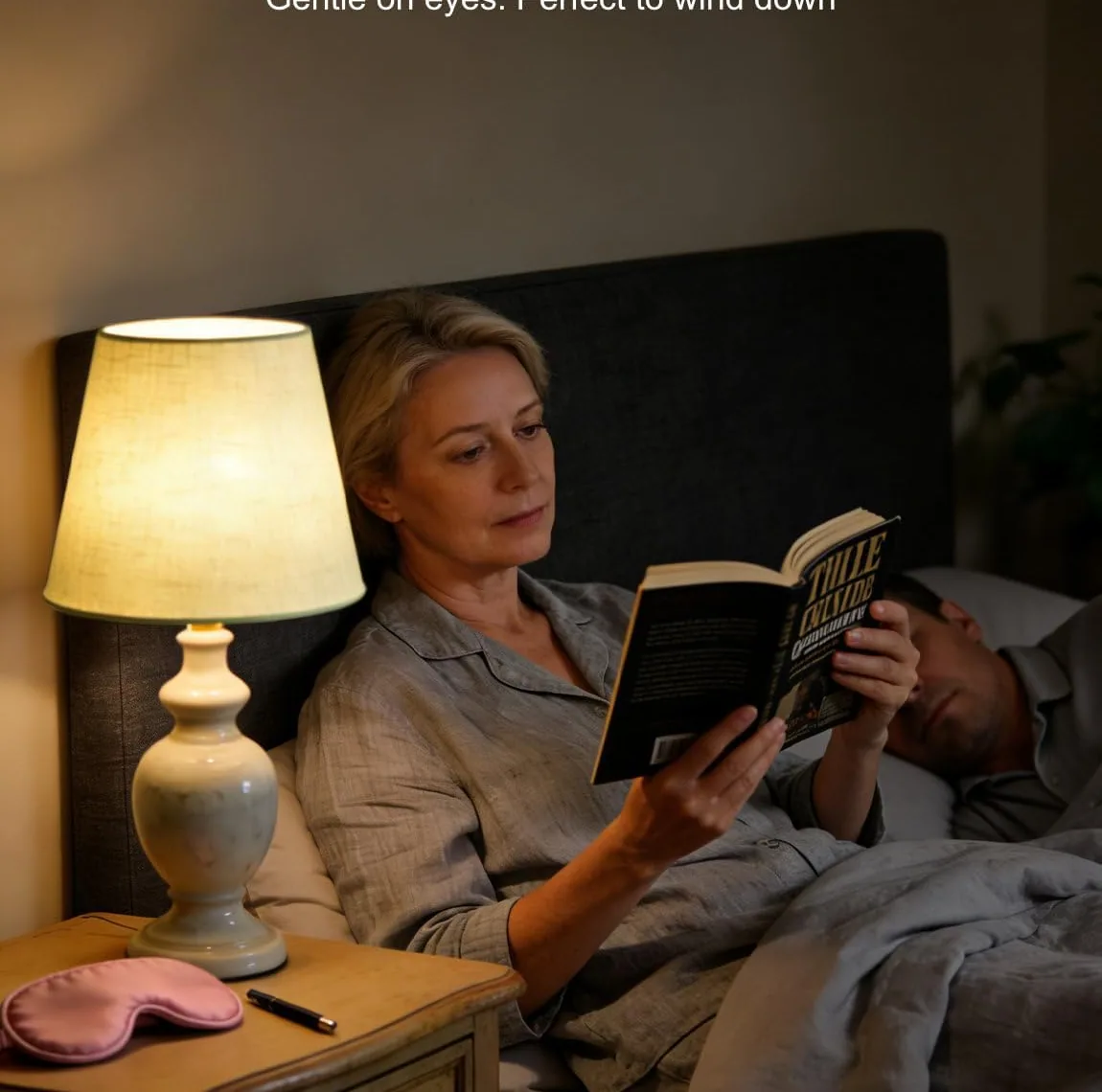
Not every lamp needs to light a room. A bedside lamp, a ceiling fan light or a hallway fixture often looks better with less light. Our A15 3W bulb gives the light of a 25 W incandescent from 3 W, in Soft White 2700K or Daylight 5000K, with a 240° beam. Our 1.5 W night bulb goes lower still: the light of a 15 W bulb, in warm white 2700K.

Low-watt bulbs win on running cost when a light stays on for hours. A hallway light left on all night, or a lamp that keeps a dark corner from feeling empty, is where a 1.5 W bulb earns its place. A buyer of the 3 W A15 summed up the trade:
Also, for 3W bulbs, these put out plenty of brightness.
What low-watt bulbs will not do
It is a dim bulb on purpose: 25 W worth of light will not light a whole room. It is not dimmable. The night bulb is dimmer again. It is far too dim to read by: think of it as a night light that screws into a lamp. If you want one bulb for reading in bed, an A19 in the 60 W range is a better fit, and our 3-way bulb below gives you a reading step and a low step from one lamp.

Amber and red bulbs
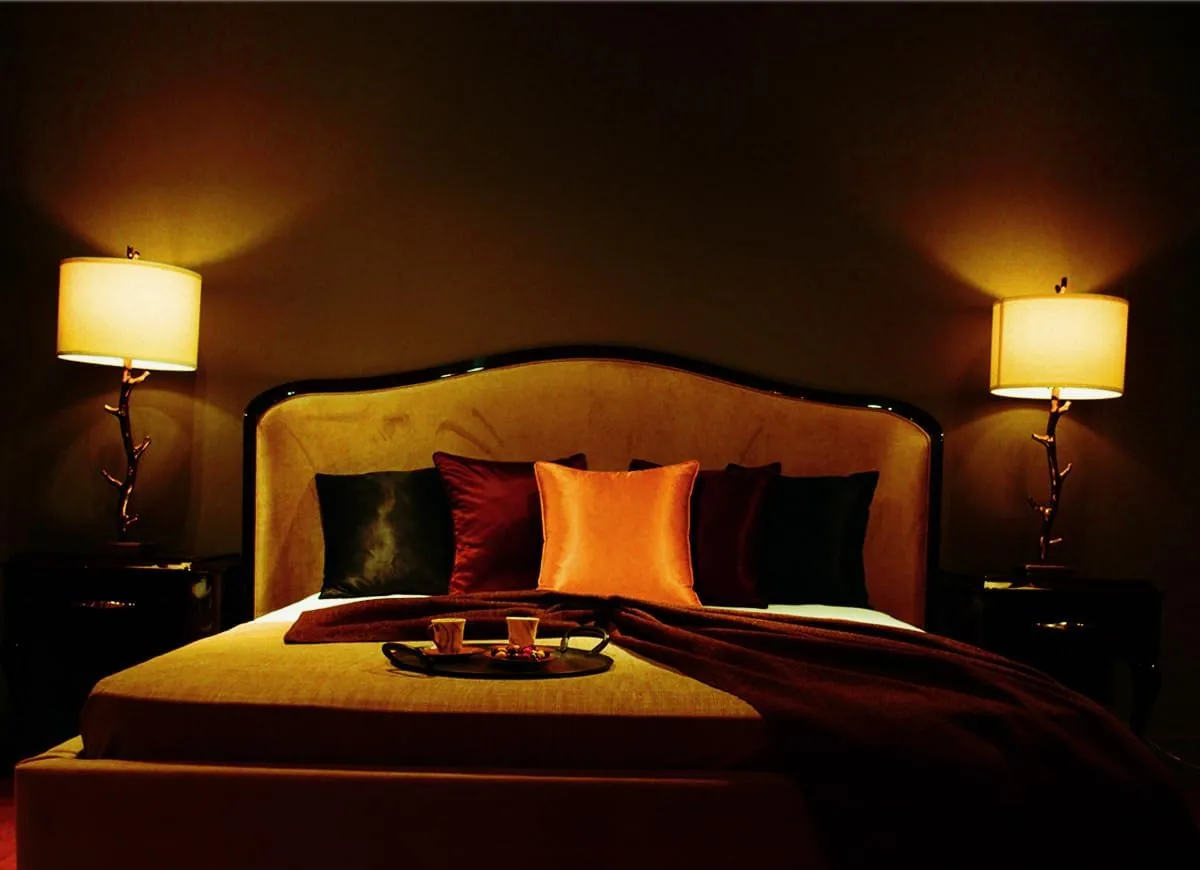
Two of our bulbs are colored lights rather than white. Our amber bulb gives a deep orange light at 1800K, warmer than any white bulb, from 3 W. Our red bulb gives a red light, also from 3 W. Both have the small A15 shape and both are dimmable with a compatible dimmer.
People choose them for the look of the light. Amber makes a room feel like it is lit by candles. Red is a mood light for parties, game rooms and holidays, and some parents like it for a nursery lamp that should stay low.
The trade-off is plain. Amber light turns white walls orange and makes colors hard to judge: it is an evening light, not a reading or work light. Red light is a mood light, not a room light, and it flattens every color in the room to red. Use them in a second lamp, not as the only light in a room where you read, cook or check the color of your clothes.
| Amber bulb | Red bulb | |
|---|---|---|
| Light color | Amber, 1800K | Red |
| Power | 3 W | 3 W |
| Looks like | 25 W incandescent | 25 W incandescent |
| Dimmable | Yes, with a compatible dimmer | Yes, with a compatible dimmer |
| Price | from $8.99 | $11.99 |
| Good for | Evening lamps | Mood lamps, parties, nurseries |
Dusk-to-dawn: the porch light that minds itself
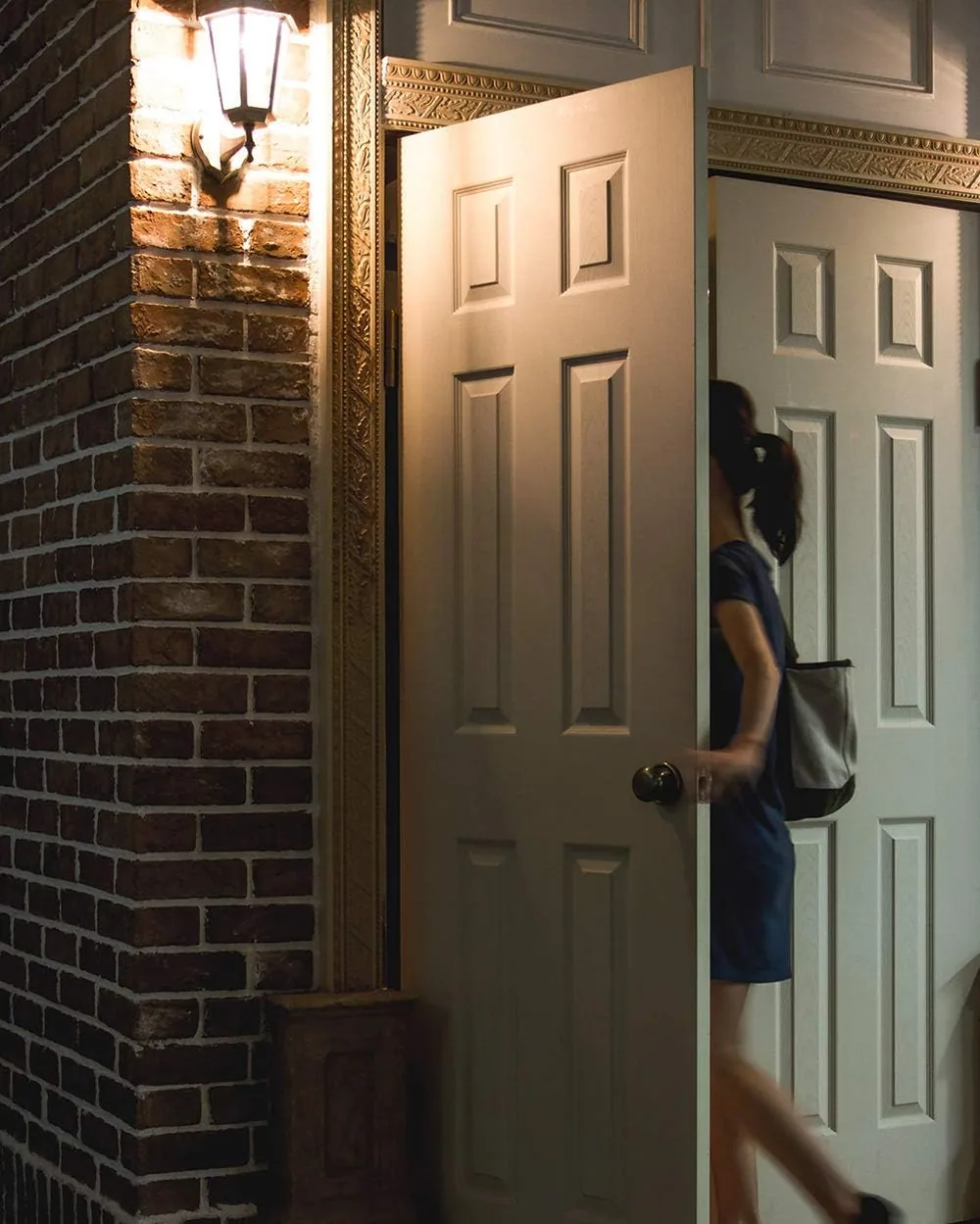
A porch light left on all day wastes power. A porch light you forget to turn on leaves you fumbling for keys in the dark. A dusk-to-dawn bulb solves both with a small light sensor in the bulb itself. Our dusk-to-dawn bulb is an A19 with an E26 base. It uses 7 W and comes in Warm White 2700K, Cool White and Daylight. You leave the wall switch on, and the bulb turns itself on at dusk and off at dawn.
Buyers love the same thing about it: they stop thinking about the porch light. One who works a late shift wrote:
I work 2nd shift, so it is great that they are on when I get home about 1:15 AM.
The tip from another buyer is worth copying. Keep the switch on and make it hard to switch off by accident:
I keep the switch for the lights on at all times and put a piece of tape over it so it doesn’t get accidentally turned off.
Where the sensor gets confused
The sensor reads the light around it, so other lights can fool it. The same buyer noticed this every December:
The only issue I have with it is during Christmas the holiday lights are too bright and cause it not to detect darkness.
The sensor needs to see daylight: inside an enclosed glass lantern, under a deep eave or next to a brighter light it can stay on all day or flicker on and off. It is not rated for fixtures open to rain. We also had a buyer who expected a motion sensor and gave the bulb two stars. If your bulb seems to switch on only when someone walks past, look for a motion floodlight nearby that may be lighting the sensor:
This light is motion sensor light, not working as dusk to dawn, it will lit up in the night only if it detects motion.
To be clear, our bulb has a light sensor, not a motion sensor. It is meant to stay on from dusk until dawn.
Where it can go
Damp location rated only. Do not install it where rain, sprinklers or standing water reach it directly. A covered porch, a garage or a carport is right. A fixture open to rain is not.
The 3-way bulb
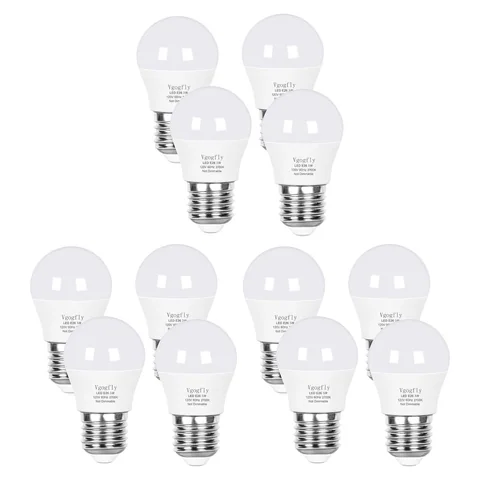
A 3-way lamp lets you pick low, medium or high light from one switch. Our 3-way bulb matches the three steps of an old 30/70/100 W bulb, and it comes two to a pack. It is an A19 with a 3-way E26 base.

In a real 3-way lamp, it works the way you expect. A buyer who uses it for reading wrote:
These work great for me for a reading lamp in our family room
In an ordinary socket, it gives one level only. A buyer who tried it in several lamps found exactly that:
In a standard lamp, the bulb does not function as a three-way bulb. It behaves like a basic on/off light only
It needs a real 3-way socket: in an ordinary socket it only gives one step. It does not work in touch lamps or on dimmers. One more honest note. Some buyers feel the steps are closer together than with an old incandescent 3-way bulb:
there's not nearly as much difference in intensity from 30W to 100W as there is with incandescent bulbs
If a big jump between low and high matters to you, test the low step in your own lamp before you put the other bulb away.
A grow bulb for a houseplant corner
Plants on a dim windowsill or in a basement corner often stretch toward light. Our grow light bulb gives a full-spectrum white light from 11 W and screws into an ordinary E26 lamp. Its light is white rather than purple, so it can sit in a living room without turning the room violet. It comes two to a pack.
Put it 6 to 12 inches above seedlings, the distance printed on the box, and raise the lamp as the plants grow. One bulb lights one plant or a small tray. A shelf of seedlings needs several bulbs or a grow panel.

Which bulb for which spot
Here is the whole range in one place, by the job you need done.
| Spot | Bulb | Why | Price |
|---|---|---|---|
| Fridge or freezer | A15 LED Refrigerator Bulb, 40W Equivalent | A15, 40 W look, plastic cover | from $6.59 |
| Bedside lamp, ceiling fan | 3W A15 LED Bulb, 25W Equivalent | 3 W, 25 W look, small shape | from $8.99 |
| Hallway all night | 1.5W A15 Night Bulb, 15W Equivalent | 1.5 W, warm white glow | from $7.99 |
| Evening lamp | Amber A15 LED Bulb, Dimmable | Amber 1800K, dimmable | from $8.99 |
| Mood or party lamp | Red A15 LED Bulb, Dimmable | Red light, dimmable | $11.99 |
| Covered porch, garage | Dusk-to-Dawn LED Bulb with Light Sensor | On at dusk, off at dawn | from $8.99 |
| 3-way floor lamp | 3-Way A19 LED Bulb, 30/70/100W Equivalent | 30, 70 and 100 W steps | $14.24 |
| Plants indoors | Full-Spectrum LED Grow Light Bulb | 11 W white full spectrum | $14.24 |
None of our bulbs are smart bulbs, and only the amber and red ones are dimmable. If you want app control or a dimmer on a white light, look for a bulb made for that job.
Changing a bulb safely
A few habits keep the job simple. Switch the light off at the wall before you touch the bulb, and for a fridge, unplug it or turn it off at its own switch if it has one. Let an old incandescent cool for a few minutes before you unscrew it. Screw the new bulb in by its base, not by the cover, and stop when it is snug. If it does not light, give it a little more turn, as the fridge buyer above found.
Outdoors, check the fixture's own rating as well as the bulb's. A fixture made for covered porches keeps rain off the socket. A bulb rated for damp locations cannot make up for a fixture that lets water in.
Where to go next
The whole range is in our LED bulbs. Our bulb guide puts every bulb on one page with its base, shape, power and light color. And if the dark evenings mean colder walks, our guide to keeping head and hands warm covers hats, gloves and headbands for winter.
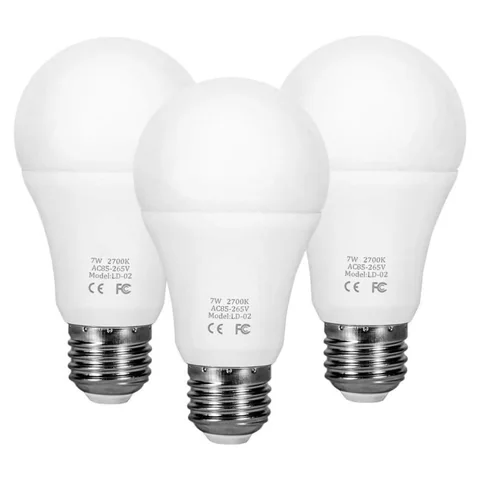
Vgogfly Dusk-to-Dawn LED Bulb with Light Sensor
Warm White, 2-pack · $8.99
See Colors & PriceOur retail partner takes the order.
Sources
- Federal Trade Commission (16 CFR 305.23), Labeling for lighting products, read October 19, 2026
- U.S. Department of Energy (10 CFR 430.2), Definitions, read October 19, 2026
More from Field Notes

Cold days
Keeping your head and hands warm on cold days
Wind chill, glove sizes, trapper hats and winter running bands.