Cold days
Keeping your head and hands warm on cold days
Wind chill, glove sizes, trapper hats and winter running bands.
Beanies
Three questions pick the hat: how cold it gets where you walk, how big your head is, and whether you like a hat that sits close or falls back.
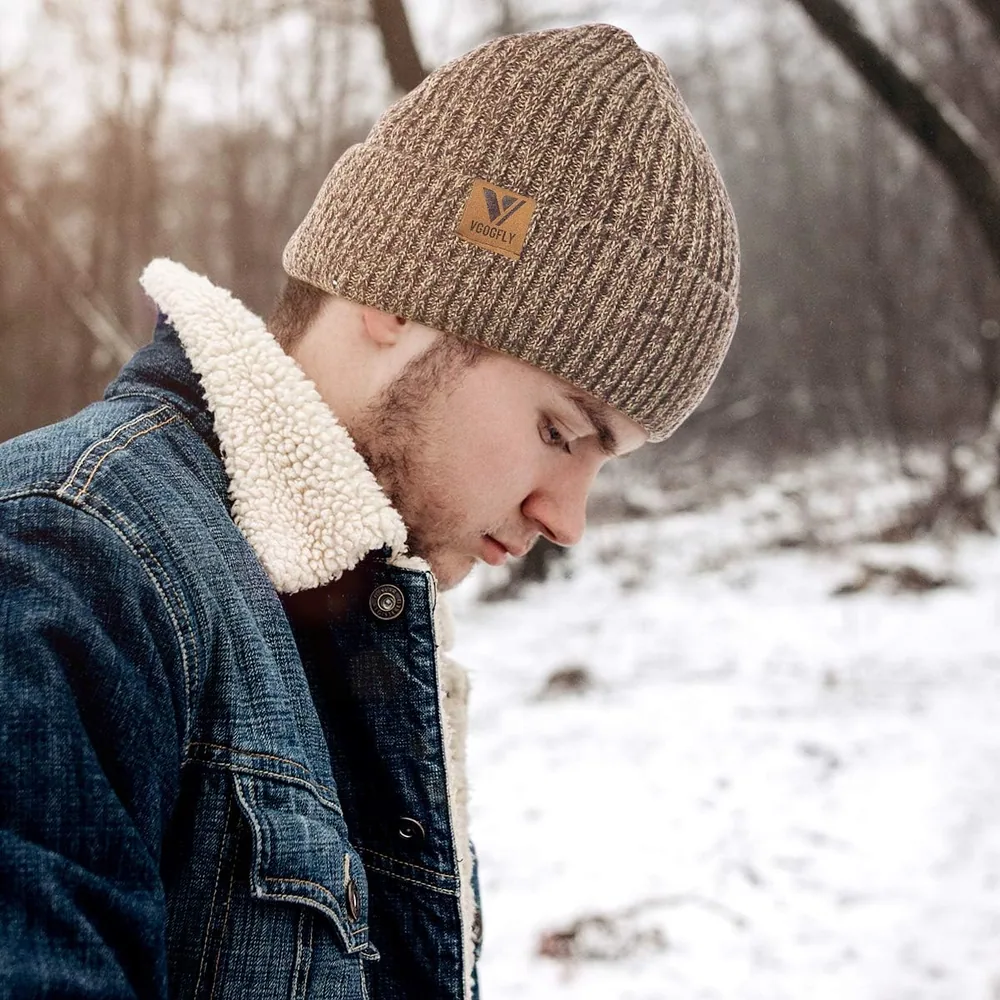
A beanie is the cheapest piece of winter gear most people own, and the one they replace most often. It gets lost on a bus, left in a car, borrowed and never returned. So it makes sense to choose it on purpose. Our four beanies cover 79 colors between them, and they differ in three ways that matter more than color: the shape of the crown, whether there is a lining inside, and how far the knit stretches.
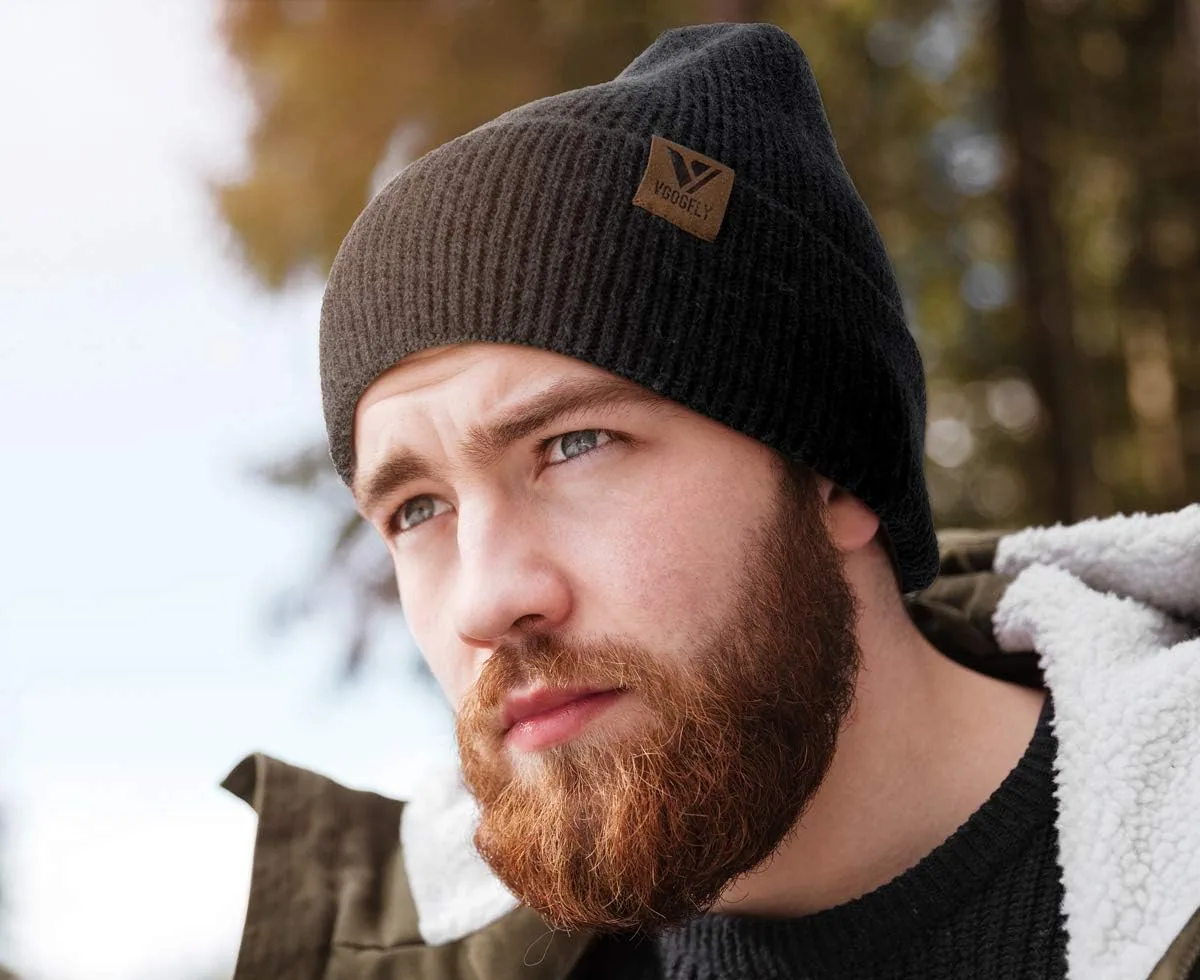
This guide walks through those three choices in the order we would make them, with the numbers for each of our hats. If you already know your head size, jump to the fit guide. If your hands get cold before your head does, our guide to head and hands in the cold covers gloves, trapper hats and winter running bands.
You can argue about jackets and boots, but almost every winter checklist starts with the head. Federal guidance for people who work outdoors puts it in five words:
Wear a hat. Hats reduce body heat escaping from your head.
The same page adds that you should protect the ears, face, hands and feet, which is where a beanie earns its place. A good hat covers the top of the head and the ears together, and it stays put when you turn your head into the wind. A hood can do part of that job, but it moves with your collar, falls back when you look up, and leaves a gap above the forehead.

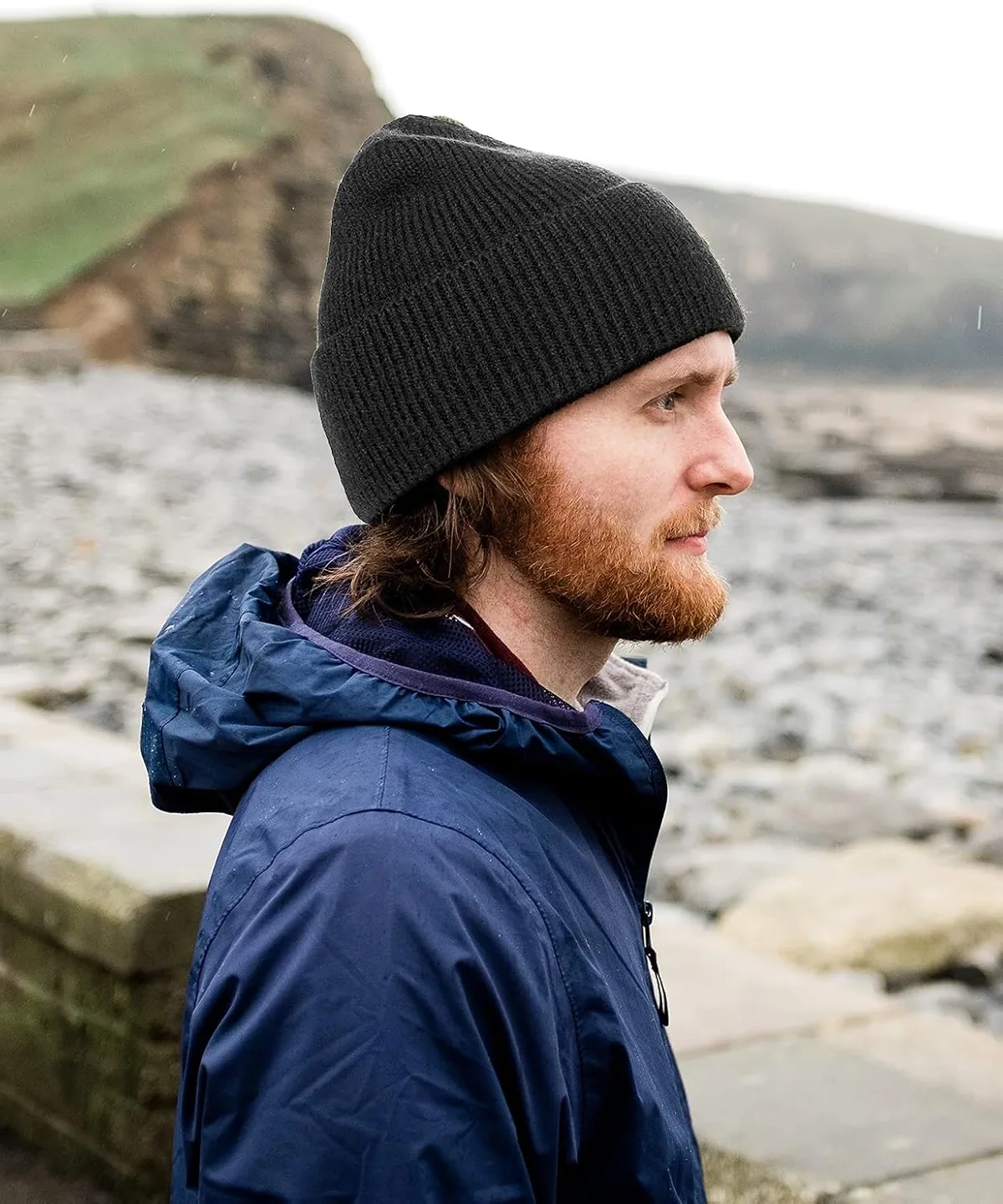
Ears matter most on a windy day. The wind chill guide goes into the numbers, but the short version is simple: wind pulls heat from bare skin far faster than still air, and ears are thin and sit out in the open. Whatever beanie you pick, it should come down far enough to cover the tops of your ears without pulling up when you move your jaw.
When going outside in winter make sure body parts most often affected by frostbite are covered in warm, dry clothing: nose, ears, toes, cheeks, chin, and fingers.

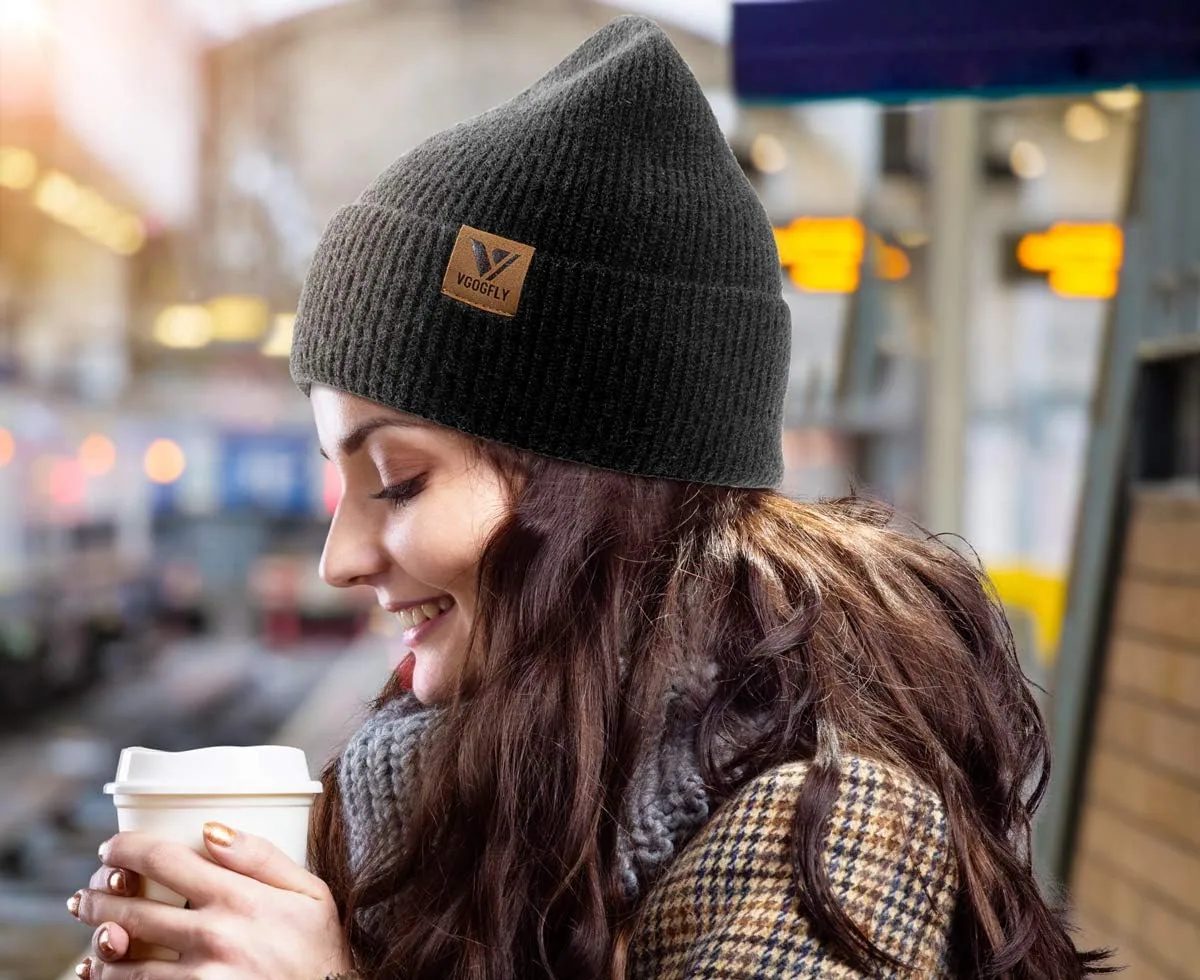
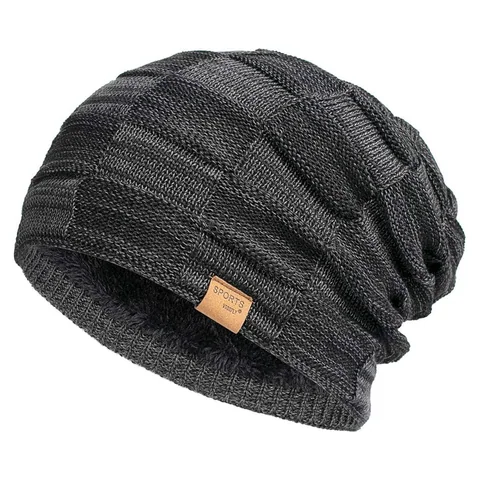
Every beanie we make is one of two shapes. A slouchy beanie has a long crown that falls back behind the head when you pull it on. A cuffed beanie, the classic watch cap, is shorter, with a band of knit folded up at the brim. Neither shape is warmer by itself. What changes is where the extra knit sits and how close the hat lies against your head.
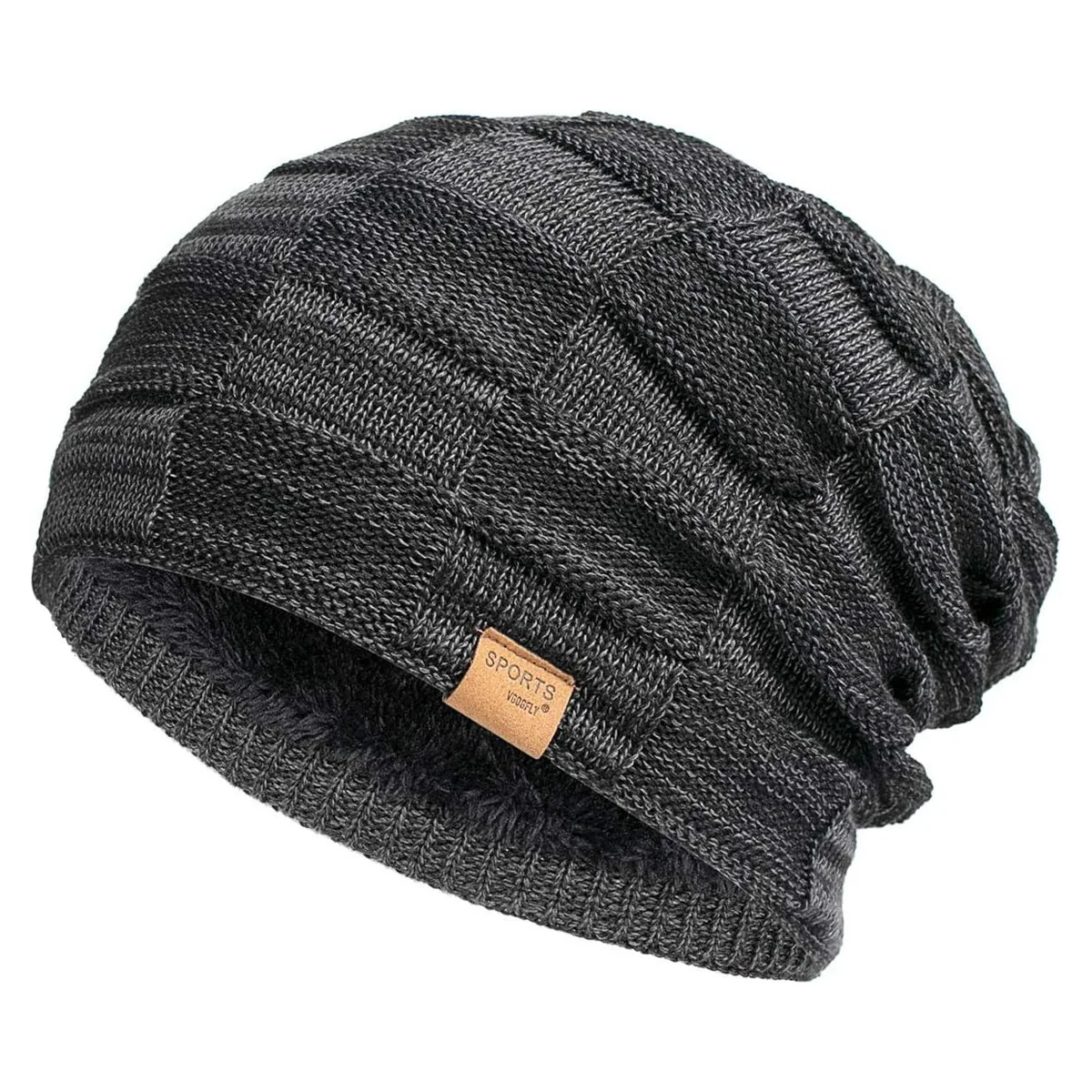
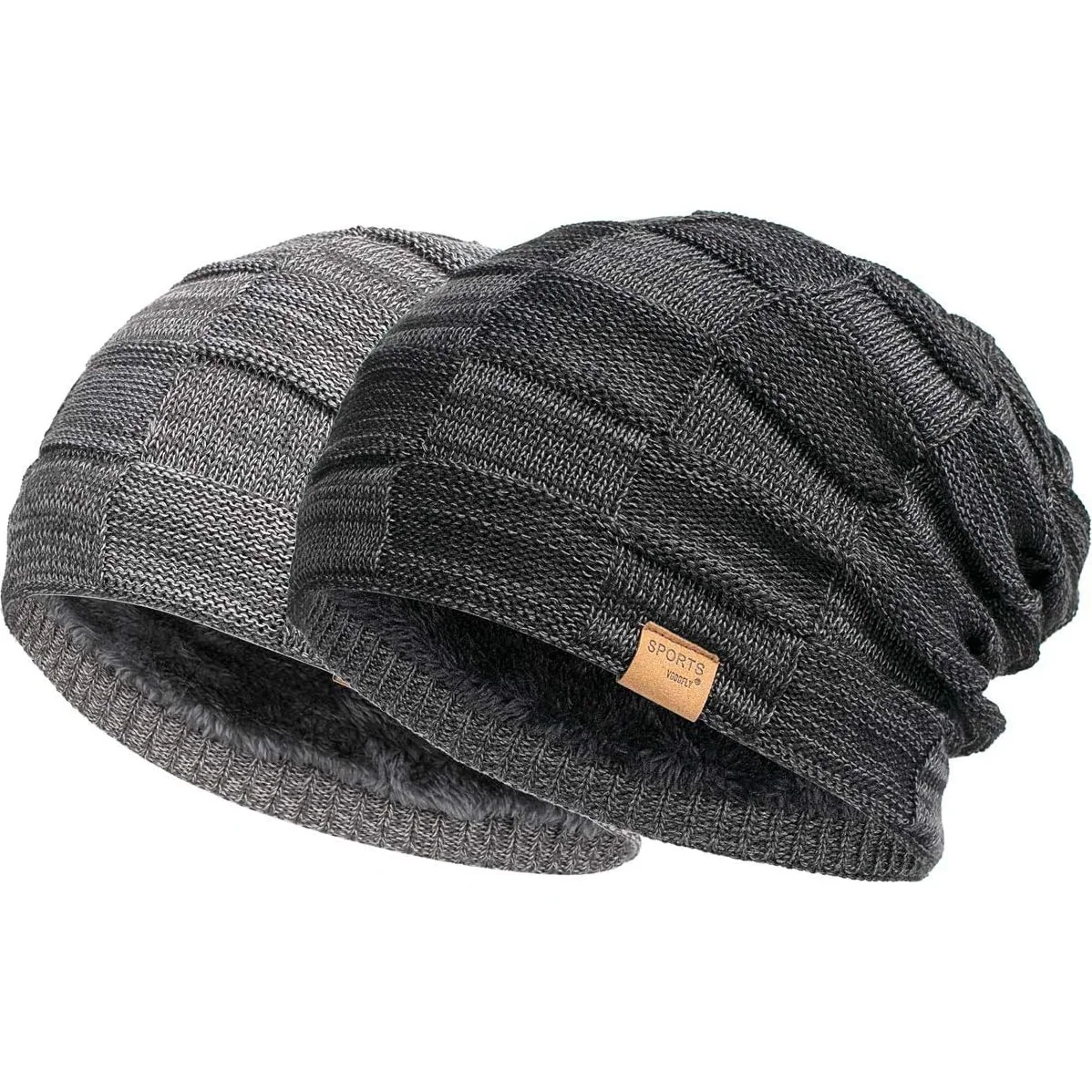
Our slouchy lined beanie is the hat Vgogfly is best known for. The crown is long enough that you can pull the edge down to your eyebrows and still have a soft pouch of knit at the back. That spare length is useful in two ways. It lets the hat fit a wide range of heads, from 17.7 to 26.5 inches around. And it gives you somewhere to tuck long hair, so the hat does not ride up on a ponytail or a bun.
The slouch is a look, too, and not everyone likes it. If you want a hat that sits close to the top of the head with no extra fabric, a slouchy beanie will feel loose to you however you pull it on. That is the main reason to choose a cuffed one instead.
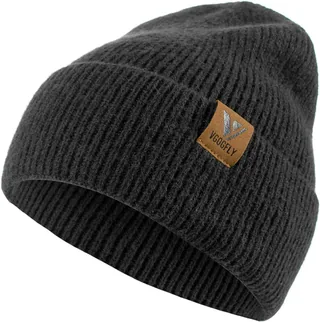
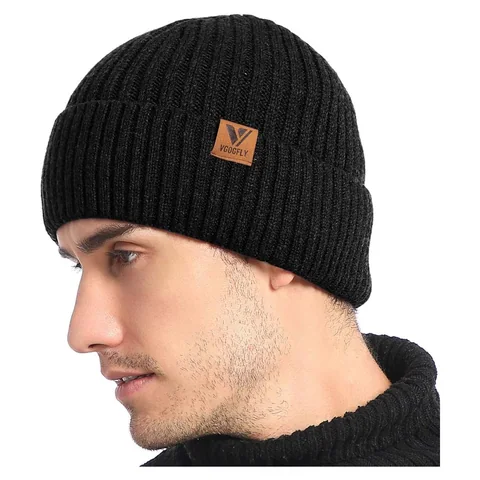
A cuffed beanie folds up once at the brim, so you get a double layer of knit around the lower part of the hat. On our ribbed cuffed beanie and lined cuffed beanie, the cuff carries our leather V patch at the front. The rib of the knit pulls the hat in around the head, so a cuffed beanie looks neater and stays closer.
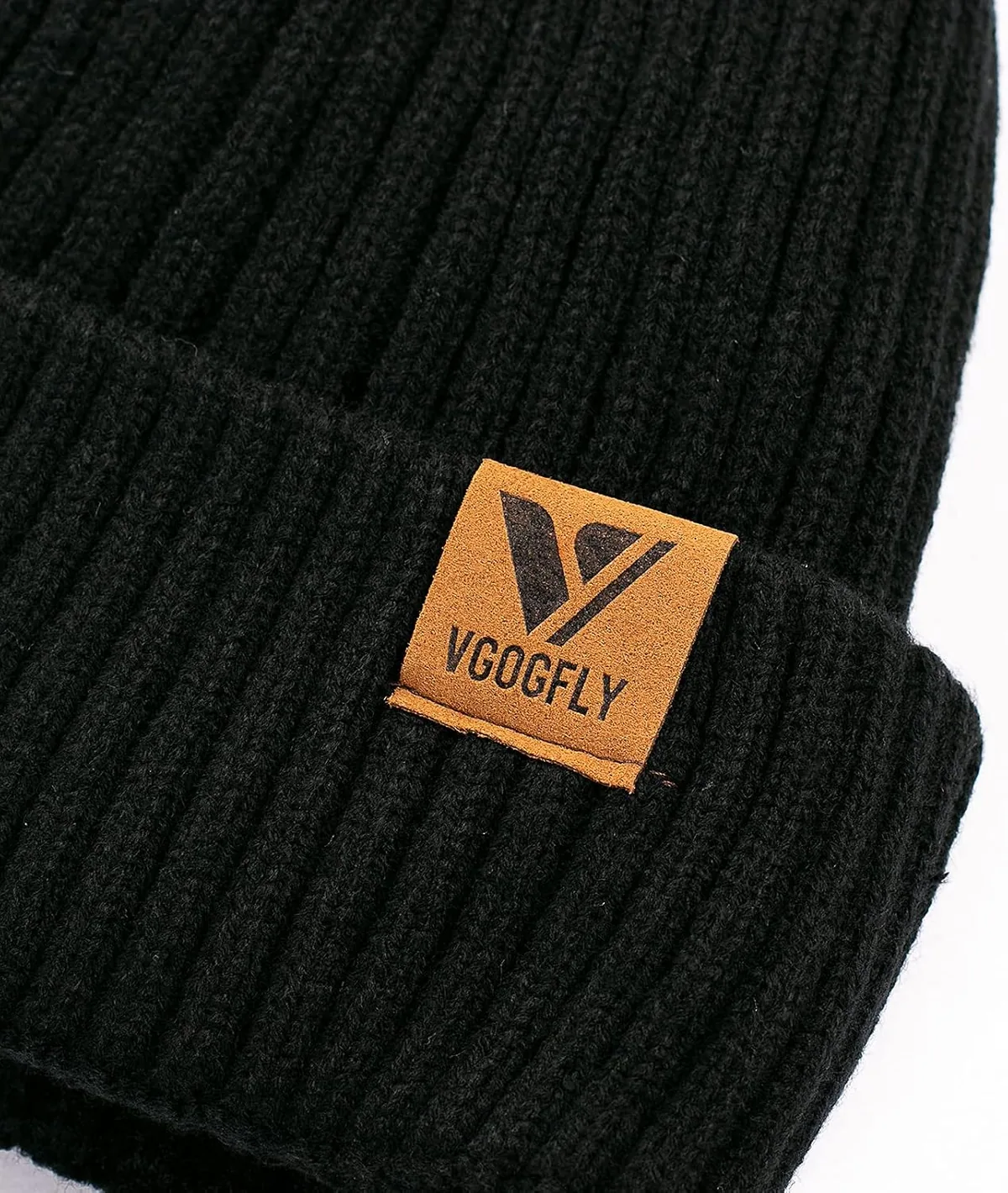
One of our buyers describes the fold in plain terms:
it is folded over so that you get two layers over the ears so that they stay extra toasty
Unfold the cuff and the same hat becomes longer, with a little slouch at the back. Some buyers wear it that way on mild days and fold it back up when the wind picks up. It is the most flexible of our hats for that reason.
| Hat | Shape | Lining | Colors | Price |
|---|---|---|---|---|
| Slouchy Lined Beanie | Slouchy, long crown | Fleece inside | 17 | from $7.19 |
| Slouchy Lined Beanie, 2-Pack | Slouchy, long crown | Fleece inside | 20 | from $13.99 |
| Ribbed Cuffed Beanie | Cuffed watch cap | Single knit layer | 23 | from $6.99 |
| Lined Cuffed Beanie | Cuffed watch cap | Fleece inside | 19 | from $7.99 |
This is the choice that changes how warm a hat feels. A lined beanie has a second layer inside, a soft fleece that sits against your forehead, ears and the top of your head. An unlined beanie is a single layer of knit, which makes it lighter and thinner.
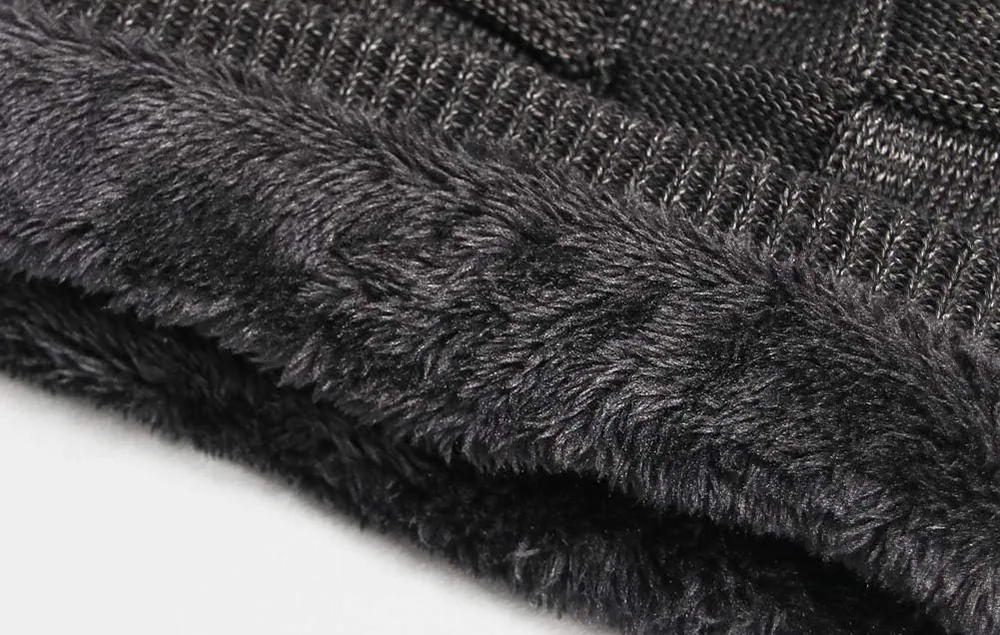
Knit fabric is full of small gaps. That is what makes it stretch, and it is also how wind gets through. A fleece lining fills those gaps from the inside and adds a layer of soft, fuzzy fibers that trap still air. On a cold, windy morning, still air next to the skin is what you want.
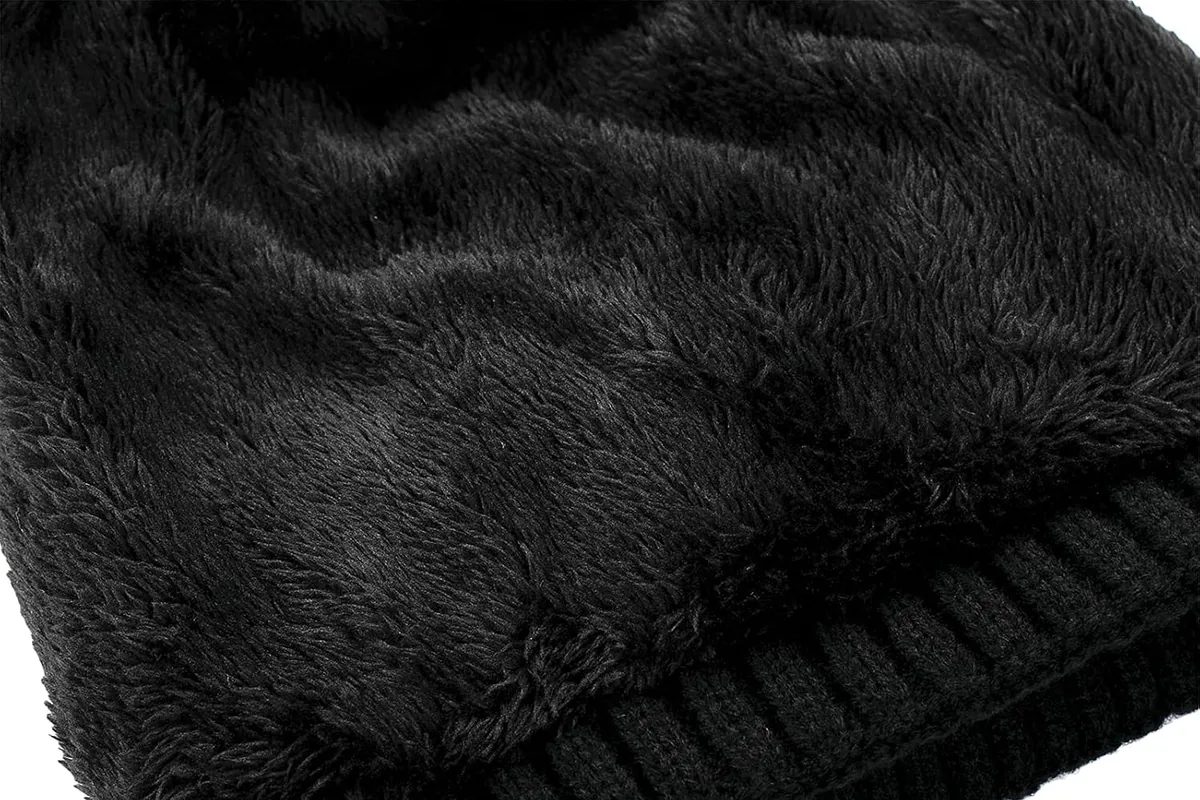
Three of our hats are lined. The slouchy lined beanie and the 2-pack have a fuzzy fleece lining that runs all the way up through the crown, not just around the band. The lined cuffed beanie lines a chunky rib with a soft artificial fleece. Buyers notice the lining first:
The material is very soft especially on the inside it’s like a soft fluffy fleece highly recommend for anyone with a sensitive scalp.
A lining is not always an advantage. It makes a hat thicker, so it takes more room in a pocket, and on a mild day it can feel warm enough to make your forehead sweat. If you walk fast, cycle, or wear a hat indoors at work, an unlined knit is easier to live with.
Our ribbed cuffed beanie is the unlined one. It fits under the hood of a ski jacket, folds small, and covers the ears with its cuff. A buyer who keeps several beanies put it this way:
Worth wise is in the medium range which I would wear around the low 50s to about 57 which is comfortable.
That is a fair description. On a bitter day with wind, a lined hat does more. On a bright fall morning, the unlined one is enough and less bulky. Another buyer, who liked the ribbed beanie, was honest about the same limit:
In terms of warmth, this beanie does not stand out. It will keep you warm in chilly weather, but do not expect it to offer much protection when it’s bitterly cold outside.
Pick the lined hat for the coldest walk you do every week. Pick the unlined one if you mostly need something for the car, the shop and the school run.
All of our beanies are one size, and all of them stretch. That does not mean one size fits everyone in the same way. The number that tells you whether a hat will fit is the head range it stretches to.
Take a soft tape measure, the kind used for sewing.
Wrap it around your head just above the eyebrows and over the tops of the ears.
Bring it round the fullest part of the back of your head, level all the way round.
Read the number where the tape meets, without pulling it tight.
If you do not have a tape, wrap a piece of string around your head the same way and lay it along a ruler. Write the number down: you will use it for every hat and headband you buy.
If your head sits near the top of the usual range, start with the slouchy beanies. They stretch to 26.5 inches, the widest range we offer, and the long crown leaves room on top even when the band is stretched. A buyer in Britain who usually avoids buying hats online wrote:
I normally don't buy hats online as they inevitably arrive and are too small for my big head.
That buyer's slouchy beanie fit with room left over at the back. The cuffed beanies are a closer fit by design. Some buyers with large heads find the ribbed cuffed beanie snug:
Warm beanie but is really small. Would not recommend if you have a larger head.
And at least one found the lined cuffed beanie generous, even over a big head:
But-the one I got is really big, like really big.
Those two comments sum up the cuffed pair well. The ribbed hat runs close, and the lined hat has more room because the lining adds depth. If you are at the large end and want a cuffed look, the lined one is the safer choice.
A small head is easier to fit than a large one. Any of our beanies will stretch down, but a slouchy hat on a small head can look more slouchy than you intended. If your head is on the small side, the ribbed cuffed beanie gives the neatest fit, and you can fold the cuff twice if the crown feels tall.

Color is the fun part, and our beanies come in plenty of it. The single slouchy beanie comes in 17 colors. The ribbed cuffed beanie comes in 23, including 8 space-dyed mixes where the yarn changes color as it is knit, so the hat comes out in soft stripes. The lined cuffed beanie comes in 19, including marled mixes where two shades are twisted together.
A few practical notes from living with knit hats. Dark solids, black, navy and dark grey, hide wear the longest. Pale colors show the grime from a collar or a car seat, though they wash well by hand.

Marled and space-dyed knits hide a pill or a pull in the yarn better than a solid does, because the eye does not catch a single stray fiber in a busy pattern. And bright colors, yellow, orange and bright blue, are easier to find on a crowded coat rack and easier to see on a dark road.
If you share hats in a family, give each person a different color. It sounds obvious, and it ends the morning hunt by the front door. The slouchy beanie alone has enough shades for a family of five without a repeat.
The slouchy beanie 2-pack puts two slouchy lined hats in one box, in a color pair: black with dark grey, navy with wine, light grey with army green and more. It is the same hat as the single. Buyers keep one by the door and one in the car, or share the pair with a partner. A couple who both wear them wrote:
They are lightweight but yet so warm and sturdy.
If you only want one color, the single slouchy beanie gives you more of them. If you want two hats anyway, the pair costs less than two singles in most color choices: the 2-pack is from $13.99, and the single is from $7.19.
A beanie is the right hat for most winter days. It is not the right hat for every one. Wind is what decides it. The National Weather Service explains wind chill as the temperature your skin actually feels:
The wind chill temperature is how cold people and animals feel when outside.
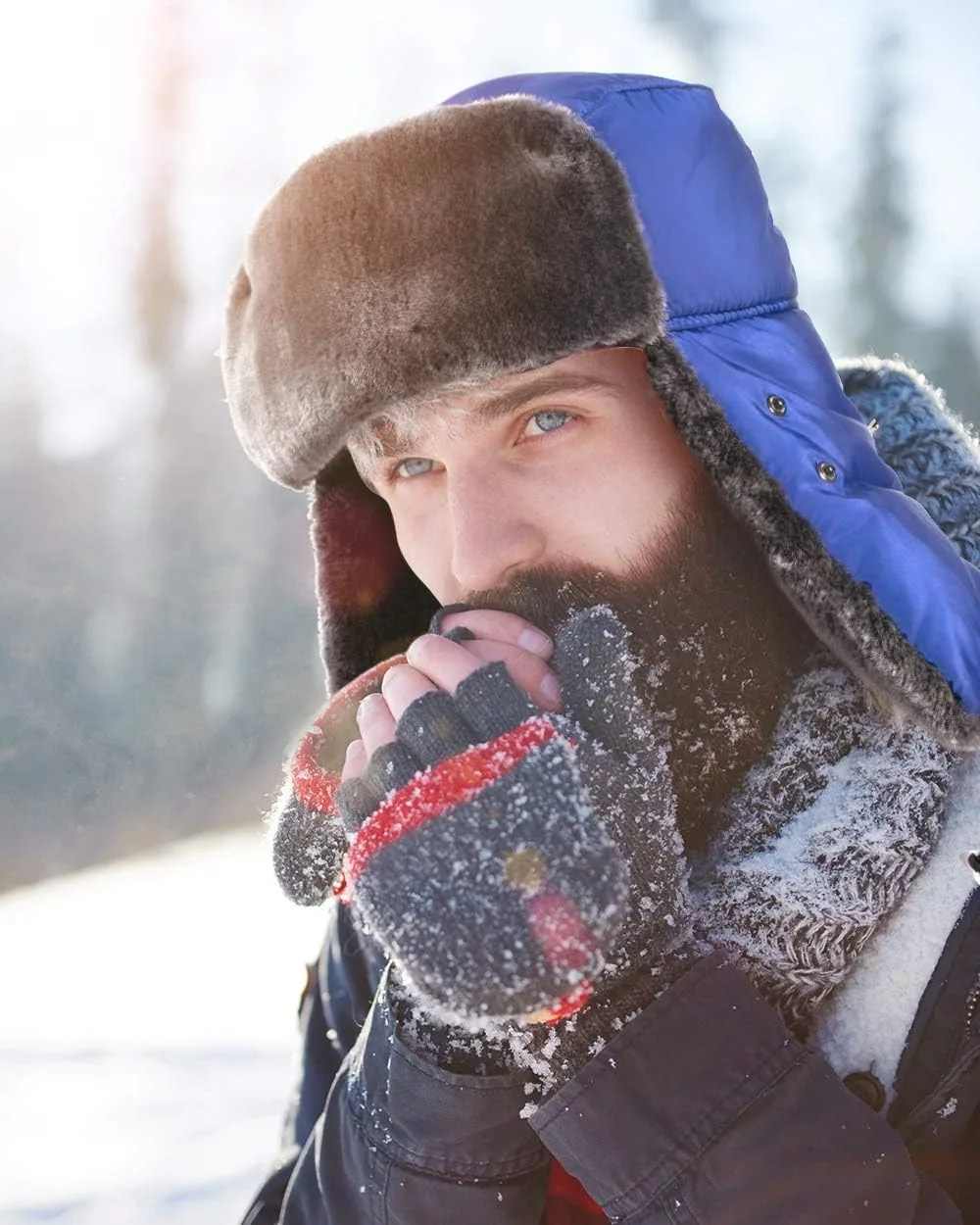
The worked example on that page is sobering. At 0°F with a 15 mph wind, the wind chill is -19°F, and exposed skin can freeze in 30 minutes. A beanie covers the head and ears, but it leaves the cheeks, nose and chin open. On days like that, a hat with ear flaps and a face cover does a job a knit cap cannot.
That is why we make a trapper hat as well: faux fur ear flaps, a fur brim and a mask that snaps on over the nose and mouth. It is a bulky hat, and on a mild day it is far too much. For a long walk into a hard wind, it covers what a beanie leaves open. Our guide to cold days compares the two in more detail.
Knit hats last longer when they are treated gently. Our care advice for every beanie is the same: hand wash in cool water and dry flat. That advice comes from buyers as much as from us. One buyer of the slouchy beanie wrote:
Only thing I'd advise is to not place in dryer after a wash and just let it air dry so the inside stays soft.
The dryer is the enemy of a fleece lining. Heat and tumbling flatten the soft fibers and can shrink the knit. Here is the routine we suggest:
A lined beanie takes a day or so to dry through. An unlined ribbed hat is often dry by the evening. If the cuff on a ribbed hat loses its fold after washing, fold it while it is still damp and let it dry that way.
Not every buyer is gentle, and one reported what happens when a hat goes through a rough wash:
Not made to be washed every time it wears and tears if to much spin cycle it's to rough for it.
That matches our experience. These are everyday knits, not technical gear. Treat them like a good sweater and they last for several winters.
We would rather you know what to expect. A knit hat wears in a few predictable places. The fleece lining flattens over time, faster if it goes through a dryer. The edge of the cuff can stretch if you pull the hat on by the cuff rather than the crown. And seams can open, which is the most common complaint we see. One buyer, who otherwise loved the slouchy beanie, wrote after a couple of months of daily wear:
I’ve had it for a month or two I think and the seam on the inside is coming apart now.
A loose inside seam is easy to close with a few hand stitches in a matching thread. Pull the hat on from the back of the crown, not by the edge, and it will hold its shape longer.
For most people, the Slouchy Lined Beanie: fleece inside, a fit up to 26.5 inches and 17 colors. For other needs, choose by situation:
| If you | Choose | Why |
|---|---|---|
| Have a big head or long hair | Slouchy Lined Beanie | It stretches to 26.5 in, and the long crown leaves room |
| Want one hat for the coldest days | Lined Cuffed Beanie | Fleece lining under a chunky rib, cuff over the ears |
| Need a light hat that fits under a hood | Ribbed Cuffed Beanie | Unlined, 23 colors, the closest fit |
| Want two hats in two colors | Slouchy Lined Beanie, 2-Pack | Two lined slouchy hats in a color pair |
| Face a hard wind for an hour | Trapper Hat with Face Mask | Ear flaps and a snap-on mask |
Whichever you pick, measure your head first and check it against the range. It takes two minutes and saves a hat that sits too tight or slides down over your eyes. The fit guide puts every hat and headband on one scale, and our beanie range lets you filter by lining and color.
And if your hands go numb before your ears do, the next thing to read is our guide to keeping head and hands warm. For the dark evenings that come with winter, our LED bulb guide covers the porch light, the fridge and the lamp by the bed.
Sources
Cold days
Wind chill, glove sizes, trapper hats and winter running bands.