Cold days
Keeping your head and hands warm on cold days
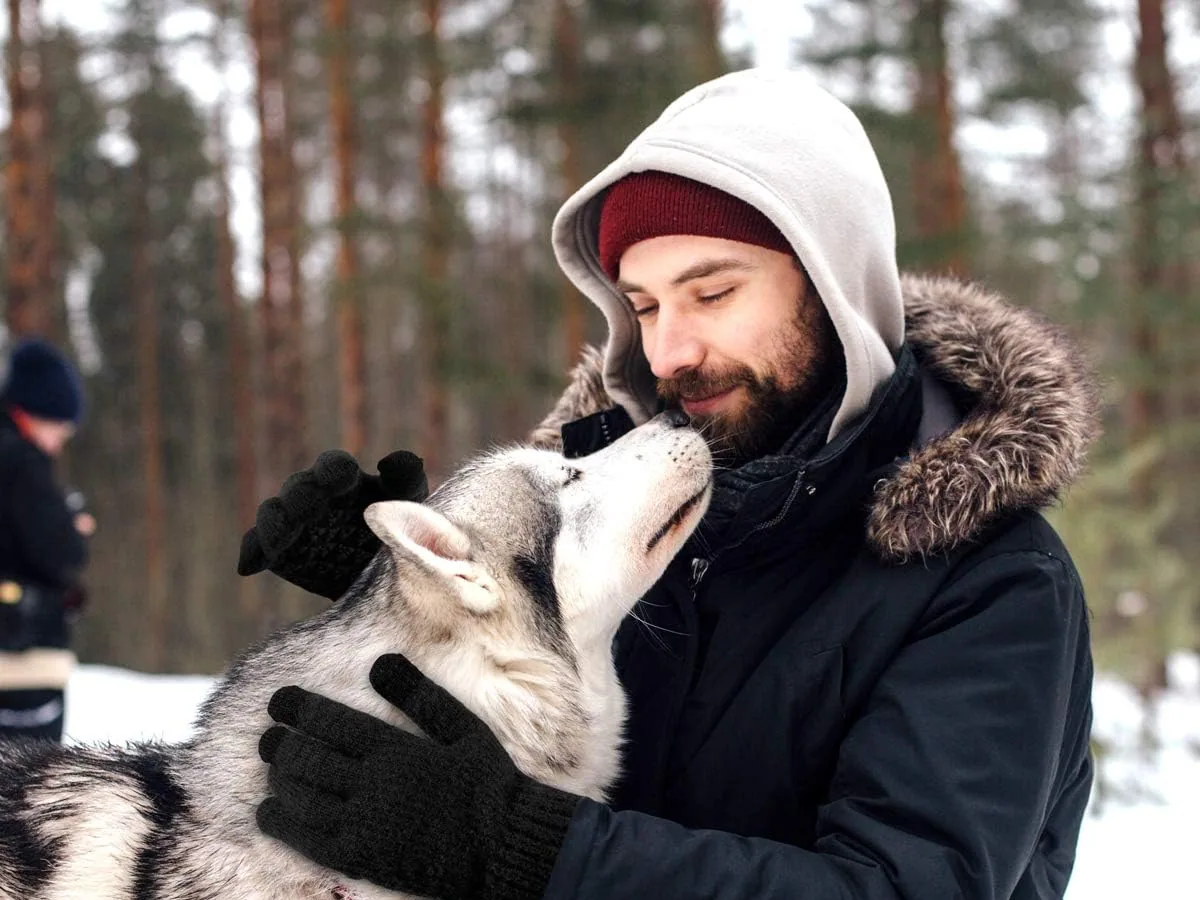
Wind takes heat from the face, ears and fingers first. Each one needs its own cover, from a dog walk at 30°F to a ridge in a 15 mph wind.
Contents
- What wind chill means for your ears and fingers
- Gloves: warm fingers that still work a phone
- When a beanie is not enough: the trapper hat
- Winter runs: a thin band under the hood
- Cold and moving: bikes, rinks and motorcycles
- Putting it together: layers for head and hands
- Looking after gloves and hats
- Where to go next
Cold days are rarely cold everywhere at once. Your core stays warm inside a coat while your fingers go stiff on the phone and your ears sting at the bus stop. The parts that suffer first are the parts that stick out: ears, cheeks, nose and fingers. This guide is about those parts, and about the small things we make to cover them: knit gloves with touchscreen fingertips, a trapper hat with a face mask, and thin headbands for winter runs.
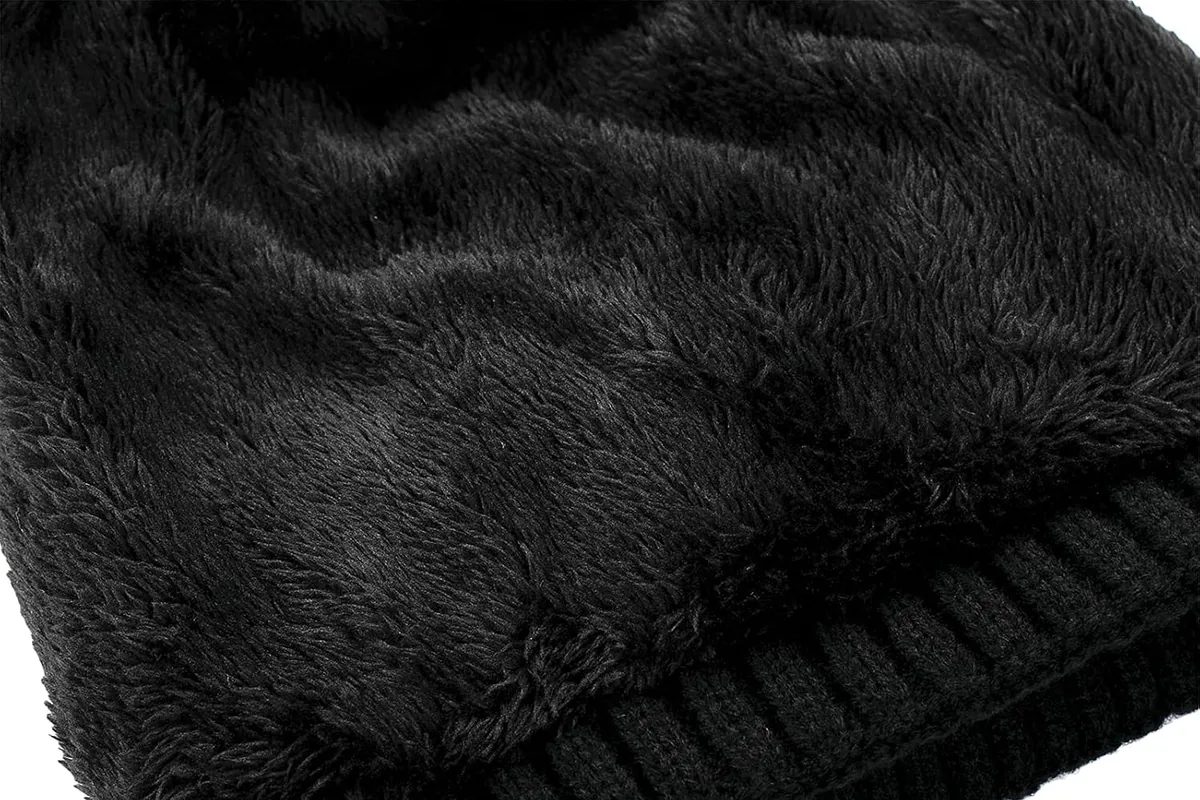
If you are choosing a beanie, our beanie guide goes deeper into linings, cuffs and head sizes. Here we look at the whole picture, from a dog walk on a still morning to a long walk into a 15 mph wind.
What wind chill means for your ears and fingers
The temperature on the forecast is the temperature of the air. It is not what your skin feels when the wind is blowing. The National Weather Service puts it simply:
The wind chill temperature is how cold people and animals feel when outside.
The wind chill index is built around a face, not a thermometer. The weather service calculates wind speed at the height where it hits people:
Calculates wind speed at an average height of 5 feet, the typical height of an adult human face
That is why your face and ears feel the wind first. They sit at exactly the height the index is built for, and they have little to keep them warm. The worked example on the same page is the one to remember:
If the temperature is 0°F and the wind is blowing at 15 mph, the wind chill is -19°F. At this wind chill temperature, exposed skin can freeze in 30 minutes.
You do not need to live in the far north to meet that kind of day. A cold snap with a steady wind can bring it to a parking lot anywhere. The useful habit is to check the wind as well as the temperature before you choose what to put on your head and hands. A still 20°F morning is a beanie and knit gloves. A windy 20°F morning on an open road may call for ear flaps and a mask.
Sun helps, too. The same page notes that bright sunshine can raise the wind chill temperature by 10°F to 18°F. A sunny walk at noon and a dark walk at dusk at the same air temperature feel nothing alike on bare skin.
Which parts to cover first
Public health guidance lists the same places every winter. The CDC says to cover the parts most often affected by frostbite with warm, dry clothing:
When going outside in winter make sure body parts most often affected by frostbite are covered in warm, dry clothing: nose, ears, toes, cheeks, chin, and fingers.
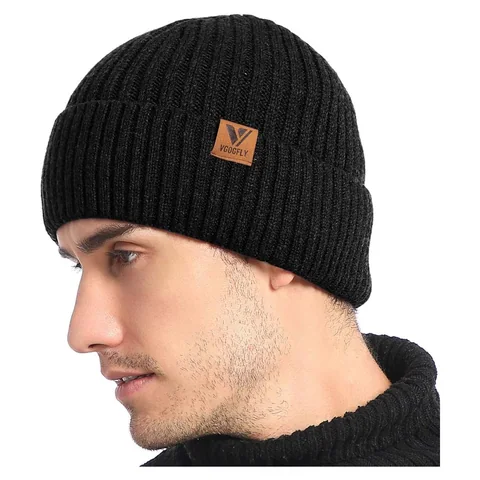
That list maps neatly onto what we make. Ears and the top of the head: a beanie. Ears, cheeks, nose and chin together: a trapper hat with its mask. Fingers: gloves. The rest of this guide takes them one at a time.
Gloves: warm fingers that still work a phone
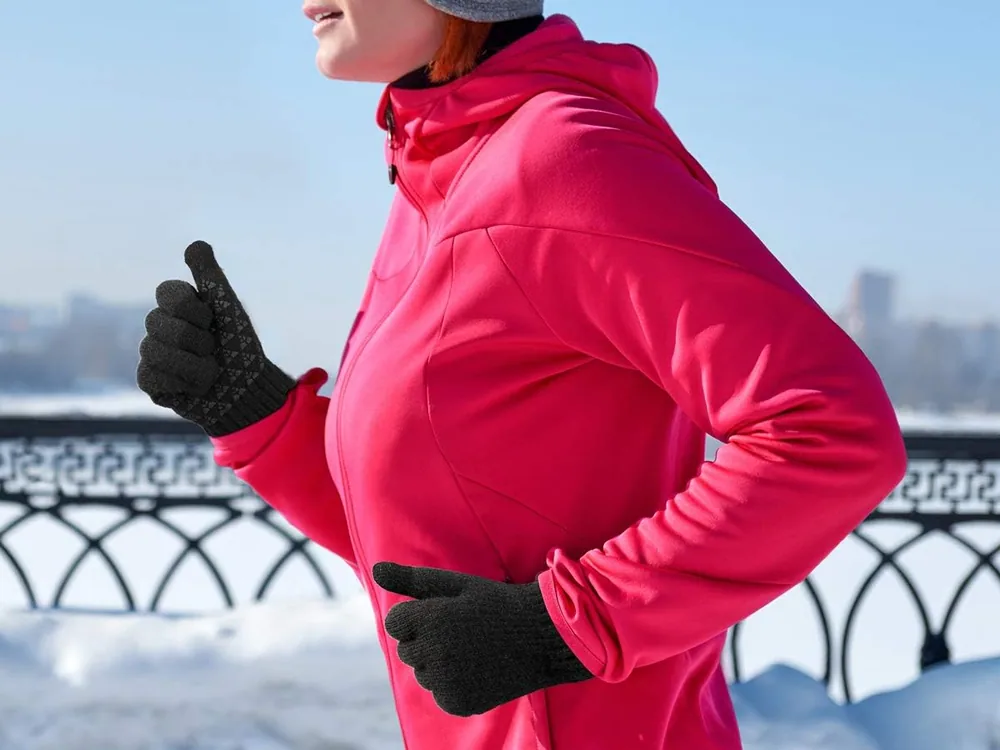
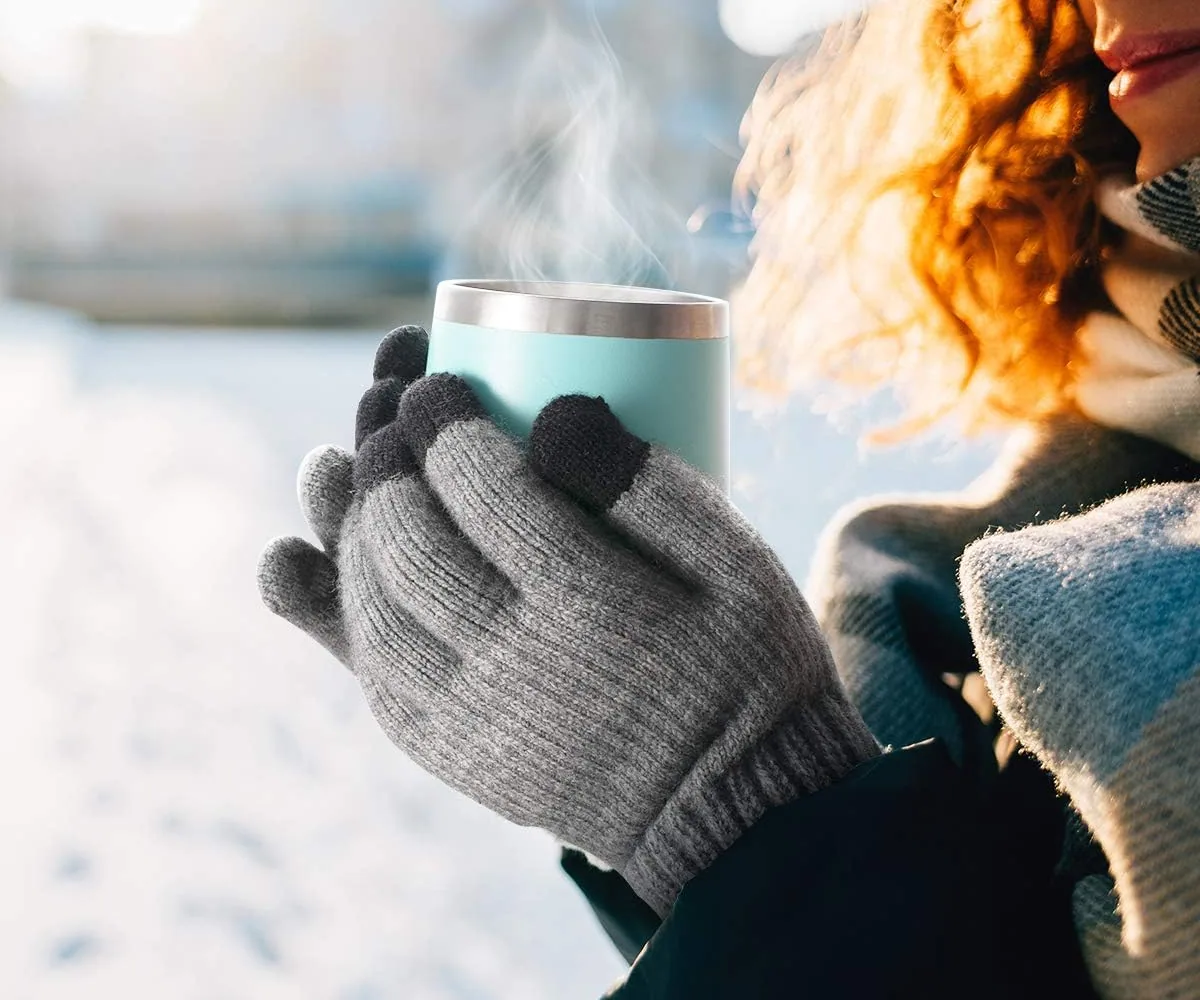
The problem with most winter gloves is simple. The moment your phone buzzes, you take one off. Our touchscreen knit gloves are made around that moment. Conductive yarn runs through the fingertips, so a tap or a swipe on a phone screen works through the knit. A silicone triangle print on the palm gives you grip on the phone and on a steering wheel.
Inside, the gloves have a fleece lining. Outside, they are a polyester knit with enough stretch to hug the fingers without pinching. A buyer who wears them for morning walks wrote:
I bought them mainly for cold morning walks, and they’ve kept my hands surprisingly warm, even in wind and freezing temps.
Touchscreen fingertips are useful, but they are not magic. They work best for taps, swipes and big buttons. Typing a long message through knit is slower than with bare fingers, and that is true of every knit glove we know. If you text all day outdoors, keep messages short, or use voice input.
Sizing the gloves
Unlike our hats, the gloves come in three sizes, and the size matters. Knit gloves that are too small feel tight across the knuckles. Gloves that are too large leave empty fabric at the fingertips, which makes the touchscreen tips miss. Measure the hand you write with:
Hold your hand flat, fingers together, thumb out to the side.
Wrap a soft tape around the palm, just below the knuckles, not around the thumb.
Read the number without pulling the tape tight.
Compare it with the chart. Between two sizes, take the larger one.
| Size | Around the palm, in | Around the palm, cm |
|---|---|---|
| Small | 6.7–7.9 | 17–20.1 |
| Medium | 7.5–9 | 19.1–22.9 |
| Large | 9–9.8 | 22.9–24.9 |
Wrap a soft tape around your palm just below the knuckles, thumb out. Between two sizes, take the larger one. The fit guide
The sizes overlap a little, Small up to 7.9 inches and Medium from 7.5, so a hand right at the edge fits either. In that case, choose by finger length. Long fingers do better in the larger size.
A buyer with small hands found the Small size right:
These gloves fit my small hands very nicely.
What knit gloves will not do
Knit gloves are not waterproof. Wet snow, a snowball fight or a wet shovel handle will soak through, and wet gloves feel cold fast. The CDC makes the same point about wet clothing in general:
While hypothermia is most likely at very cold temperatures, it can occur even at cool temperatures (above 40°F) if a person becomes chilled from rain, sweat, or submersion in cold water.
So for heavy snow, skiing or shoveling, a shell glove that sheds water is the better tool. Our knit gloves are for walks, commutes, errands and driving, where you want your fingers free and your phone usable. Some buyers prefer leather for driving, and one of them still kept ours:
I usually prefer leather gloves, but these impressed me because they permit me to use my electronics so easily.
| Our knit gloves | Insulated ski gloves | Mittens | |
|---|---|---|---|
| Phone screen | Works through the fingertips | Usually needs the glove off | Needs the mitten off |
| Fingers | Separate, thin knit | Separate, bulky | Together in one pocket |
| Wet snow | Soaks through | Sheds it | Depends on the shell |
| Sizes | S, M, L by palm | By hand size | Often one size |
| Best for | Walks, commutes, driving | Skiing, shoveling | Standing still in deep cold |
The gloves come in 19 colors, from black and navy to bright red, orange and turquoise. Bright gloves are easy to find when one drops in the snow. They cost from $6.99 a pair.
When a beanie is not enough: the trapper hat
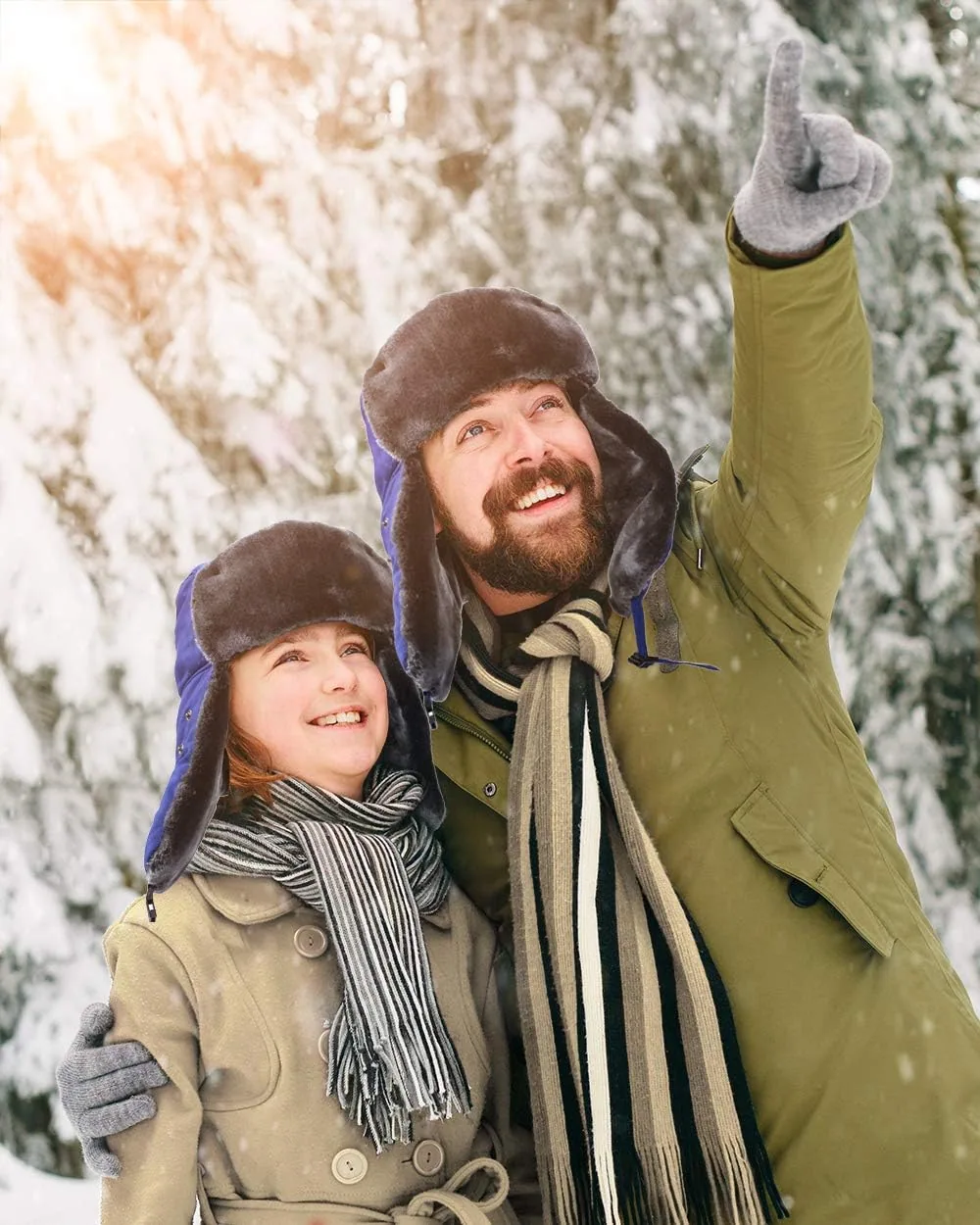
A beanie covers the head and ears. On the windiest days, that leaves the cheeks, nose and chin bare, which are three of the places the CDC lists. Our trapper hat covers them. It has a polyester shell with a waterproof outer layer, faux fur along the brim and the ear flaps, and a mask that snaps on over the nose and mouth.
Buyers wear it for the jobs where you stay outside for a long time: shoveling a driveway, walking a dog in a north wind, snowboarding, even riding a motorcycle in cold weather. One buyer described a walk in the teens:
Tried it out in below freezing, in the teens temperatures. The 1st thing I noticed was how warm it made my neck feel.
The mask is the part people praise most, and it has a clever use. It snaps on at both sides, so you can unsnap one side when you turn and walk with the wind at your back:
The face mask serves my purpose when I’m walking into the wind and is easily detached from one side when I reverse my route and walk with the wind at my back.
The downsides of a trapper hat
It is bulky. It will not fit in a coat pocket, and on a mild day it is far too warm. Glasses can fog with the mask fastened, because your breath has nowhere to go but up. And the chin strap is not everyone's favorite. One buyer liked the hat and disliked the clip:
The strap has a clip that needs to be threaded.
The tip from other buyers is to fasten the clip once with the hat in your hands, adjust the strap to your chin, and then leave it threaded, pulling the hat on and off over your head. Another buyer with a large head found it roomy even with the strap at its tightest:
The only,(small), trouble with the hood is that I have a large head and it's STILL a little too big, even with the chin-strap cinched to the max.
The hat comes in blue or beige, in size Large, for $24.99. If the forecast is for still, dry cold, a lined cuffed beanie is lighter and easier. If it is for wind, the trapper hat is the one that covers your face.
Winter runs: a thin band under the hood
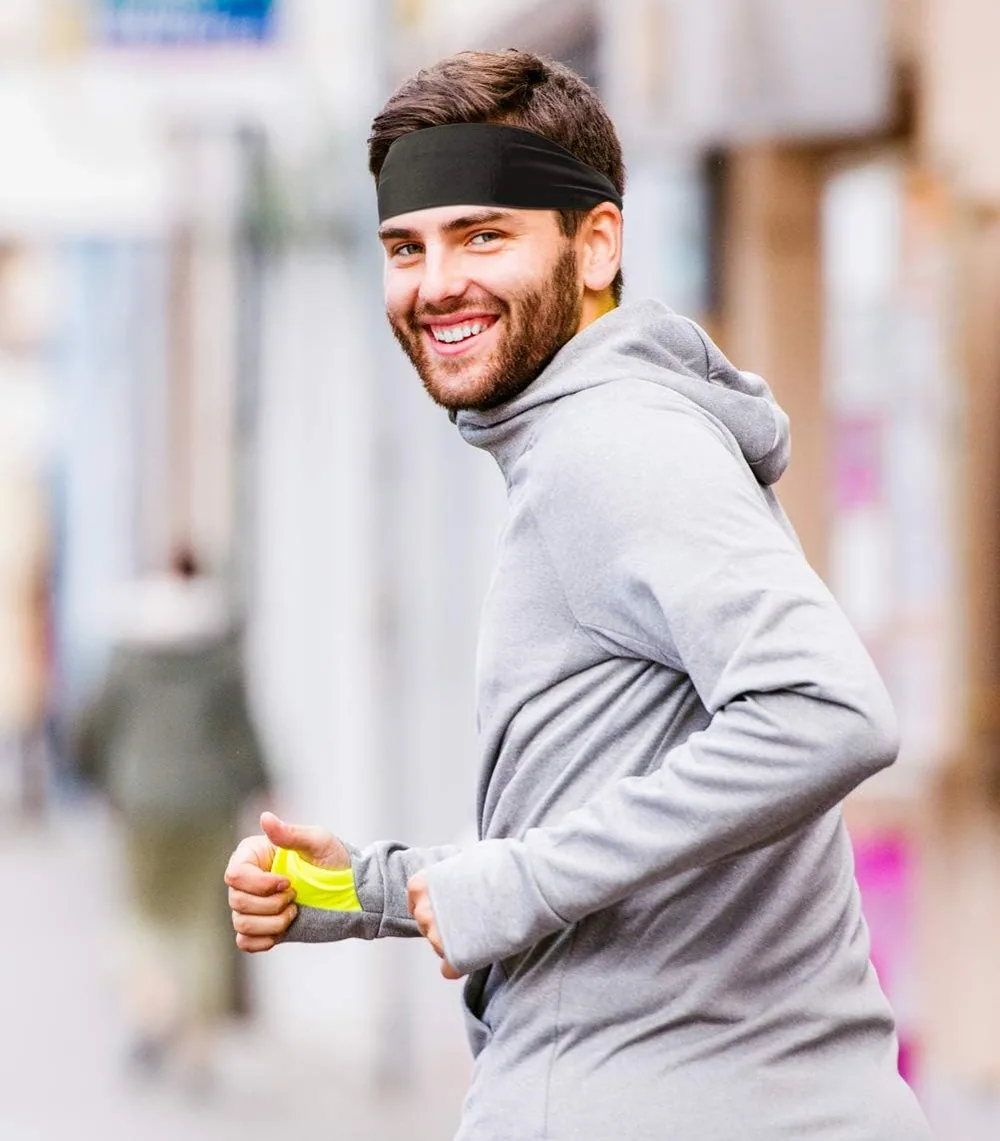
Runners have the opposite problem. Ten minutes into a winter run, a beanie is too warm and sweat starts to run into your eyes. But take the hat off and your ears are cold again within a minute. Many winter runners settle on a thin band that keeps the forehead dry and the ears covered, with a hood on top when the wind picks up.
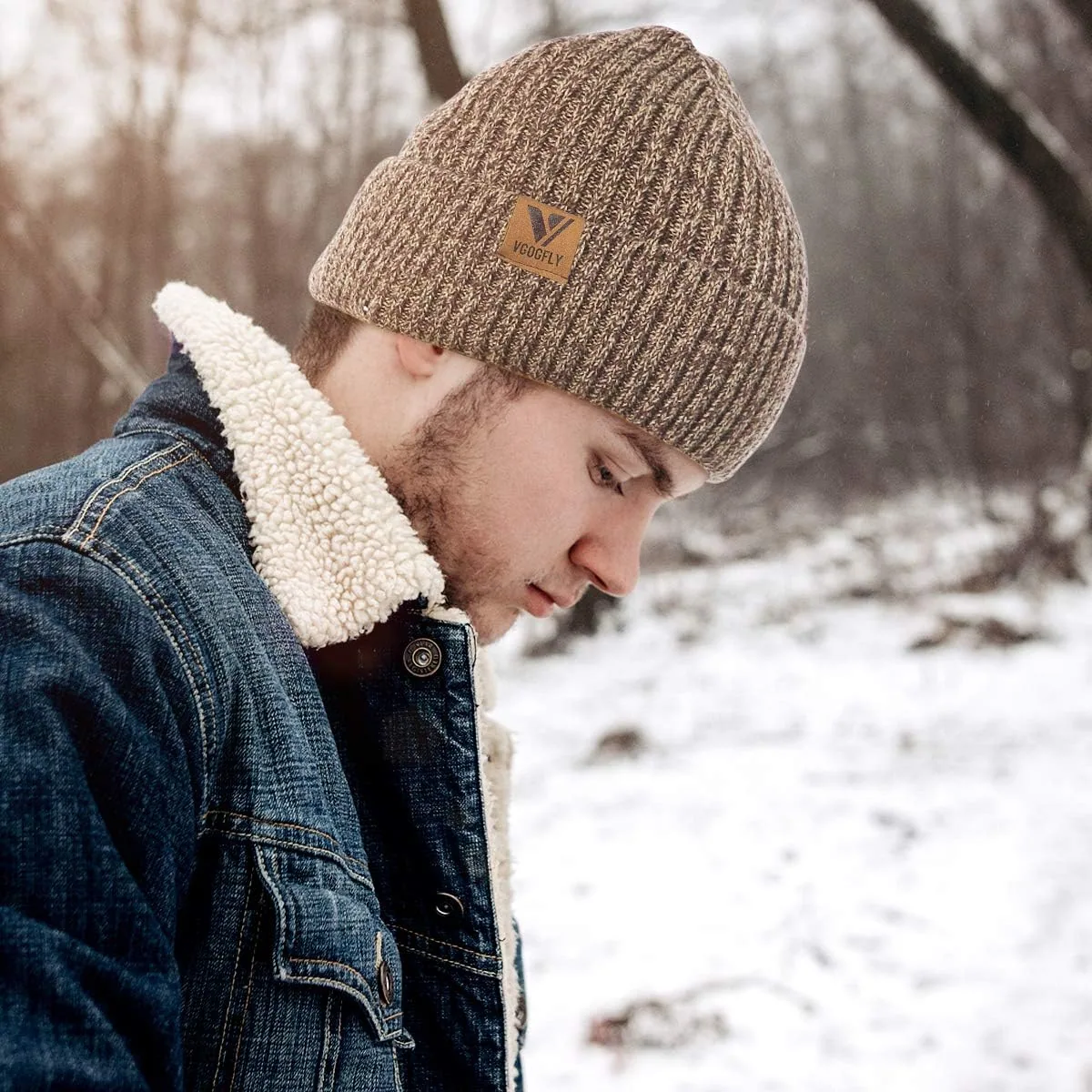
Our running headbands are made for that. They are thin, 72% polyester and 28% spandex, and they come four to a pack. They fit a head from 19.3 to 23.6 inches, and they are thin enough to wear under a bike helmet, a hard hat or a jacket hood. A buyer who wears one for long runs wrote:
Even during long runs or yard work in the sun, they keep sweat completely out of my eyes without feeling soaked or heavy.
Wet fabric next to the skin is what makes you cold on a winter run. The CDC note about chilling from sweat applies here too. A band that soaks through and stays wet does more harm than no band at all, so on a long cold run, carry a spare band and swap it halfway.
Thin band or wide sweatband
We make two kinds. The thin 4-pack folds over for a narrow band and fits under a helmet. The wider 6-pack sweat headbands cover more forehead and hold hair back better, which suits the gym and hot days more than winter. Not everyone loves the wider band. One buyer found it too warm and too tight for long wear:
Is it comfortable to wear longer than 3hours, not so much.
Another, who trains for about two hours at a time, found that a band catches the sweat but ends up fully wet:
Upon a ~2 hour workout, I didn't have to wipe my forehead once, but when I took off the headband, it was 100% saturated.
That is the honest limit of any sweatband. It catches sweat until it is full. In winter, a full band is a cold band, which is the best reason we know for packing a dry one.
| Running headbands 4-pack | Sweat headbands 6-pack | |
|---|---|---|
| Bands per pack | 4 | 6 |
| Width | Thin, folds narrower | Wide |
| Fabric | 72% polyester, 28% spandex | 72% polyester, 28% spandex |
| Head fit | 19.3 to 23.6 in | 19.3 to 23.6 in |
| Price | $8.99 | $11.99 |
| Best for | Under a helmet or a winter hood | The gym and hot days |
Cold and moving: bikes, rinks and motorcycles
Standing still in the cold and moving through it are two different problems. When you move, the wind comes to you even on a still day, and your body makes heat and sweat at the same time. A hat or glove that is perfect at a bus stop can feel too hot after ten minutes on a bike, and then too cold on the ride home once it is damp.
Knit gloves breathe better than insulated ones, which matters when your hands are working. A buyer who wore ours ice skating noticed exactly that:
I wore these for ice skating when it was maybe high 30s out and not only was it warm, but it the mesh material didn't trap heat to the point where you felt your palms getting overly sweaty.
The grip print on the palm earns its place on handlebars and a steering wheel, where a smooth knit would slide. Another buyer put it simply:
They fit well without feeling bulky, and I like the grip on the palms and fingers.
On a motorcycle or an open trailer
Speed makes its own wind chill, the same way a strong wind does. Riders who keep going into the colder months tend to want a hat that covers the ears and the neck under the collar. One buyer wears our trapper hat for exactly that:
I wear it when the temps are in the 20s annd 30s and I still want to ride the motorcycle.
A trapper hat does not go under a helmet, though. If you ride with a helmet, riders usually wear a thin band or a thin beanie under it instead, and the helmet maker's own advice on what fits underneath comes first.
On a bicycle
Cyclists face the sweat problem most. A buyer who rides through cool and hot weather wears our wider band doubled over, as it comes:
The sweatband can be worn as shown in the product photos which is doubling up on the material. I have found this to be the best method.
Bands in a pack can feel a little different from each other. A buyer with a large head found one band snug and the others comfortable, which is worth knowing if you plan to share a pack around the family:
They do vary a little in sizing.
Our tip for any cold ride: start a little cool. If you are warm and cozy at the front door, you will be sweating a mile later, and the damp will chill you on the way back.
Putting it together: layers for head and hands
Workplace guidance for cold weather says to dress in layers:
Wear several layers of loose clothing for better insulation.
The same idea works for the head and hands. You do not need one perfect hat or glove. You need a couple of pieces that combine. For the most common kinds of day, these pairs work well together.
| Kind of day | Head | Hands |
|---|---|---|
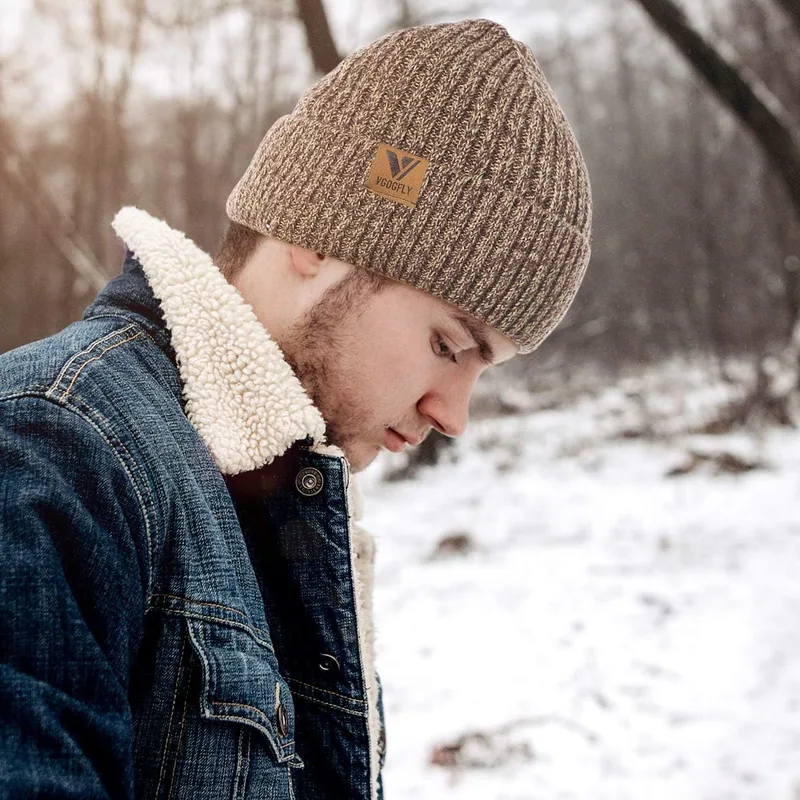
| Still and cool, around freezing | Ribbed cuffed beanie | Knit touchscreen gloves |
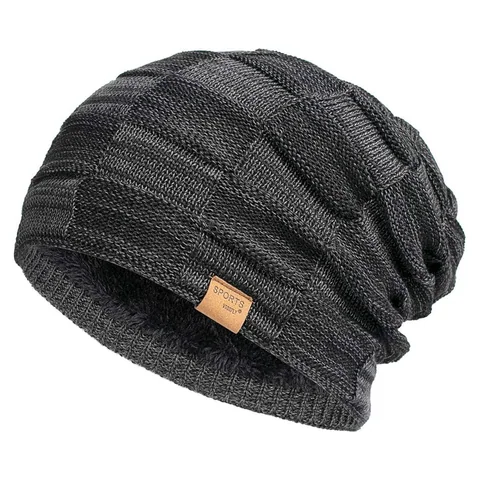
| Still and cold | Lined cuffed beanie or slouchy lined beanie | Knit gloves |
| Cold with a steady wind | Trapper hat, mask on | Knit gloves under a shell mitt |
| Winter run | Thin running band under a hood | Thin knit gloves |
| Wet snow or shoveling | Trapper hat or lined beanie | Waterproof work gloves |
A last practical point. Keep a spare hat and pair of gloves in the car. The day you need them most is the day you left them on the kitchen table. Our slouchy beanie 2-pack exists partly for that reason.
Looking after gloves and hats
Gloves and hats get grimy faster than coats, because they touch everything. Wash them by hand in cool water with a mild detergent, squeeze the water through, press them in a towel and dry them flat. Keep them away from the dryer: heat flattens fleece linings and can shrink knit. The silicone grip print on the gloves lasts longer without the dryer, too.

Dry gloves and hats fully before you put them away for the summer. A damp knit stored in a closed drawer can smell musty by autumn. A dry one comes out ready to wear.
When to replace
Replace knit gloves when the fingertips wear thin enough to see through, or when the touchscreen tips stop responding. Replace a hat when the cuff or the band has stretched so far it no longer stays over your ears.
Where to go next
If you are still choosing a hat, the beanie guide compares our four beanies by shape, lining and head size. Our fit guide puts every hat and band on one head-size scale and gives the glove chart. And when the evenings get dark early, our LED bulb guide covers the porch light that switches itself on at dusk.
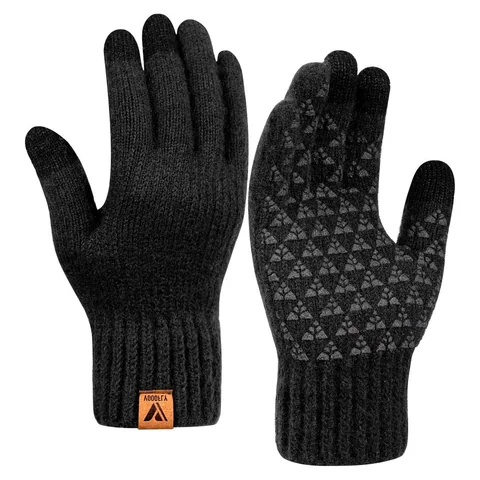
Vgogfly Touchscreen Knit Gloves
Black, Medium · $6.99
See Colors & PriceOur retail partner takes the order.
Sources
- National Weather Service, Understanding Wind Chill, read October 19, 2026
- Centers for Disease Control and Prevention, Preventing Hypothermia, read October 19, 2026
- National Institute for Occupational Safety and Health, Cold and Work: Types, Causes, Preparation, read October 19, 2026